
Quick answer: A personal loan is a fixed-rate, fixed-term loan you repay in equal monthly payments, usually over two to seven years, with no collateral required. In 2026, rates range from about 7% to 36% APR, and the rate you get depends mostly on your credit score. The most common reason people borrow is to consolidate high-interest credit card debt, and with the average credit card charging over 20%, a personal loan can save you real money if you qualify for a meaningfully lower rate and you stop adding new debt. It only works, though, when the math and the discipline both line up.
Personal loans are booming right now, and the reason is simple. Credit card balances hit a record $1.28 trillion at the end of 2025, most cards charge north of 20%, and households are looking for a way out. Personal loans have become what one credit-counseling CEO calls the middle-class refinancing option for high-interest debt. This guide covers what a personal loan actually is, what rates look like in 2026, when borrowing makes sense, and how to get the best deal.
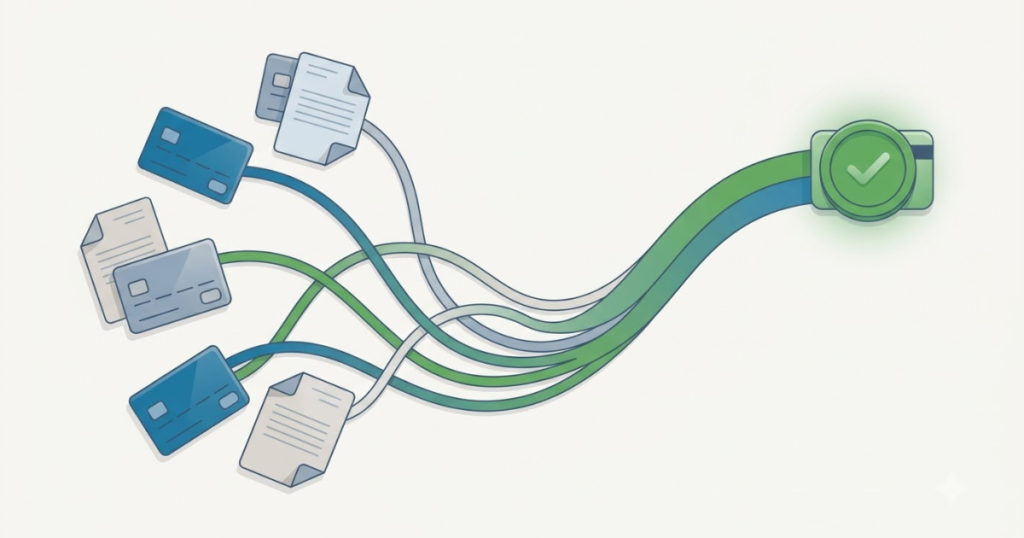
What is a personal loan?
A personal loan is a lump sum you borrow from a bank, credit union, or online lender and pay back in fixed monthly installments over a set period. Most are unsecured, meaning you do not have to put up your home, car, or savings as collateral. The lender approves you based on your creditworthiness instead.
Three features define a personal loan and make it different from a credit card:
Fixed interest rate. Your rate is locked for the life of the loan, so your payment never changes. A credit card rate is variable and can climb.
Fixed term. You choose a repayment period, commonly two to seven years, and the loan is fully paid off at the end. There is no revolving balance to carry indefinitely.
Lump-sum payout. You get the full amount up front, typically $1,000 to $50,000, though some lenders go up to $75,000 or more.
That structure is exactly why personal loans work well for a specific, one-time need and poorly for ongoing spending. You borrow a set amount, you know the payoff date, and the fixed payment makes budgeting predictable.
Current personal loan rates in 2026
Personal loan APRs generally run from about 7% to 36% in 2026, and your credit score is the single biggest factor in where you land. The averages differ by source and methodology, but the pattern is consistent: excellent credit unlocks the lowest rates, and rates rise sharply as scores fall.
For reference, prequalified data from mid-2026 put borrowers with excellent credit (720 or higher) near an average of 14.5% APR, while borrowers with good credit (690 to 719) averaged closer to 19%. Bankrate’s benchmark for a 700 FICO borrower on a small three-year loan sat around 12.4%. The table below shows typical APR ranges by credit tier.
| Credit tier | Typical score range | Typical personal loan APR (2026) |
|---|---|---|
| Excellent | 740 and up | About 7% to 15% |
| Good | 690 to 739 | About 11% to 20% |
| Fair | 630 to 689 | About 17% to 28% |
| Poor | Below 630 | About 24% to 36% |
A few important notes on 2026 rates:
Rates are not expected to fall much this year. The Federal Reserve has held its benchmark rate steady, so borrowing costs remain elevated compared with 2020 and 2021.
Credit unions often beat banks. Federal credit unions are capped by law at 18% APR, which can make them the cheapest option if you have fair credit.
Anything above roughly 24% is a warning sign. At that point a personal loan may not actually save you money, and improving your credit first could be the smarter move.
Always compare the APR, not just the interest rate, because APR includes fees and reflects your true annual cost.
What can you use a personal loan for?
Personal loans are flexible, but they are not equally smart for every purpose. Here is where they tend to make sense and where they do not.
Good uses:
Debt consolidation. By far the most common reason. More than half of borrowers use a personal loan to pay down or refinance existing debt, mostly credit cards. This is the core use case, covered in detail below.
Home improvement. A fixed-rate loan can fund a renovation without tapping your home equity.
Large one-time expenses. Medical bills, a major repair, or an emergency that you cannot cover from savings.
Uses to think twice about:
Everyday spending. If you need a loan to cover groceries and utilities, borrowing treats a symptom, not the cause, and adds a payment on top of an already tight budget.
Discretionary splurges. Financing a vacation or wedding means paying interest for years on something already in the past.
Anything you cannot realistically repay. A missed personal loan payment damages your credit and can lead to collections.
One category to avoid entirely: payday and high-cost installment loans, which can carry APRs of 300% to 400%. A traditional personal loan, even at the higher end of the range, is far cheaper.
Using a personal loan to pay off credit card debt
This is the reason personal loans are surging, so it deserves a close look. The appeal is straightforward. Credit cards charge variable rates that commonly exceed 20%, and when you carry a balance, minimum payments barely dent the principal. A personal loan replaces that with a lower fixed rate and a firm payoff date.
Consider the math. Say you owe $11,000 on cards at a 22% APR and pay $220 a month. At that pace it takes more than 11 years to clear the balance, and you pay thousands in interest along the way. Move that same balance to a personal loan at a lower fixed rate, and you could be debt-free in three to five years for far less total interest, with one predictable payment instead of several.
The savings from a lower rate are real. On a $15,000 loan over four years, the difference between an 8% APR and an 18% APR is roughly $3,640 in total interest. That is why qualifying for a lower rate matters so much, and why comparison shopping pays off.
But there is a trap that most ads do not mention. A consolidation loan pays off your cards, which frees up that credit. If you do not change the spending pattern that created the debt, you can end up with the personal loan balance and a fresh pile of card debt within months. Research has found that people who consolidate often cut their card balances sharply at first, only to run those balances back up over the following year and a half. The loan did not fail. The habits did.
A personal loan for credit card debt makes sense when all of these are true:
You qualify for an APR meaningfully lower than your current card rates.
The total cost, including any origination fee, is less than staying put.
You commit to not running your cards back up, ideally by freezing or removing them from easy access.
If you cannot get a lower rate, or you know the spending will continue, consolidation can make things worse, not better. In that case, nonprofit credit counseling may be a better first step than a new loan.
Personal loan vs. the alternatives
A personal loan is one of several ways to tackle high-interest debt or fund a big expense. Here is how it compares.
| Option | Best for | Trade-offs |
|---|---|---|
| Personal loan | Fixed payoff of card debt or a one-time expense | Fixed rate and term, but may carry an origination fee |
| Balance transfer card | Smaller balances you can repay during a 0% intro period | 0% APR is temporary, transfer fee applies, needs good credit |
| Home equity loan or HELOC | Large amounts at lower rates | Uses your home as collateral, so default risk is higher |
| Credit counseling / debt management plan | Struggling borrowers who need structure | Slower, may involve closing accounts, but no new loan needed |
The right choice depends on your balance size, your credit, whether you own a home, and how disciplined your repayment will be. For many middle-credit borrowers with several thousand dollars in card debt, a personal loan hits the sweet spot of a lower fixed rate without risking their home.
How much does a personal loan actually cost?
Your total cost comes down to two things: the APR and the loan term.
The APR bundles your interest rate with fees. The most common fee is an origination fee, typically 1% to 10% of the loan amount, which some lenders deduct from your payout. Because it is baked into the APR, comparing APRs across lenders gives you an apples-to-apples cost comparison. A loan with a lower headline interest rate but a big origination fee can end up costing more than one with a slightly higher rate and no fee.
The term is a balancing act. A longer term lowers your monthly payment but raises the total interest you pay. A shorter term costs less overall but demands a higher monthly payment. Choose the shortest term you can comfortably afford.
How to qualify for a personal loan
Lenders look at three things above all:
Credit score. Many lenders prefer a FICO score of 670 or higher, though some approve fair or bad credit at higher rates. A score of 720 or above unlocks the best pricing.
Income. You need reliable income that shows you can handle the monthly payment.
Debt-to-income ratio. This compares your monthly debt payments with your income. Lower is better, and reducing existing debt before you apply can improve your rate.
If your credit is on the edge, a small increase in your score before applying can translate into a meaningfully lower rate. A jump from 680 to 720 can shave several percentage points off your APR.
How to get a personal loan in 5 steps
Check your credit. Know your score and review your report for errors before you apply, so you know which rate tier to expect.
Prequalify with several lenders. Most online lenders, banks, and credit unions let you prequalify with a soft credit check that does not hurt your score. Get at least three offers.
Compare the APR and terms. Look at the full APR, the origination fee, the monthly payment, and the total interest, not just the advertised rate.
Pick your loan and apply. Submit a formal application with the lender you choose, which triggers a hard credit inquiry.
Receive funds and start repaying. Many lenders fund within one to a few business days. Some debt-consolidation loans pay your creditors directly, which removes the temptation to spend the money elsewhere.
Pros and cons of personal loans
The upside:
Lower fixed rates than most credit cards for qualified borrowers.
Predictable payments and a clear payoff date.
No collateral required for unsecured loans.
Fast funding, often within days.
The downside:
Rates can be high for fair or poor credit.
Origination fees add to the cost.
Taking one out does not fix overspending on its own.
Missed payments hurt your credit and can lead to collections.
Risks and red flags to watch in 2026
Personal loans are booming, and not all of that growth is healthy. Subprime originations have risen sharply, meaning many people are borrowing at rates that do not actually improve their situation. Personal loan delinquencies have ticked up too. Before you borrow, make sure the loan genuinely lowers your cost and fits your budget.
Steer clear of any lender that guarantees approval regardless of credit, pressures you to borrow more than you need, or charges upfront fees before funding. You can check a lender’s complaint record through the Consumer Financial Protection Bureau at consumerfinance.gov before you apply.
Frequently asked questions
What is a personal loan and how does it work? A personal loan is a fixed-rate loan you repay in equal monthly installments over two to seven years, usually with no collateral. You receive a lump sum up front and pay it back on a set schedule, which makes budgeting predictable.
What are personal loan interest rates in 2026? They generally range from about 7% to 36% APR, depending mostly on your credit score. Borrowers with excellent credit see rates in the high single digits to mid teens, while fair and poor credit can reach the high 20s or 30s.
Is a personal loan a good way to pay off credit card debt? It can be, if you qualify for an APR meaningfully lower than your card rates and you stop adding new debt. With cards charging over 20%, a lower fixed-rate loan can save thousands in interest. The risk is running your cards back up after consolidating.
What credit score do I need for a personal loan? Many lenders prefer 670 or higher, but some approve fair or bad credit at higher rates. The lowest rates go to scores of 720 and above.
How much can I borrow with a personal loan? Most lenders offer $1,000 to $50,000, and some go up to $75,000 or more. Your approved amount depends on your income, credit, and existing debt.
Do personal loans have fees? Many charge an origination fee of 1% to 10% of the loan amount, often deducted from your payout. Because it is included in the APR, comparing APRs across lenders shows your true cost.
How fast can I get a personal loan? Many online lenders fund within one to a few business days after approval. Some consolidation loans pay your creditors directly.
This article is for educational purposes only and is not financial, lending, or legal advice. Interest rates, fees, and terms vary by lender, state, and your individual credit profile, and change over time. Prequalify and compare offers from multiple lenders, and consider speaking with a licensed financial professional or a nonprofit credit counselor before borrowing.
