
Quick answer: A credit builder card is a credit card designed to help people with no credit or poor credit build a positive credit history. It works by reporting your on-time payments and low balances to the three credit bureaus, which are the two factors that most influence your score. There are two main types: traditional secured cards, which require a refundable deposit that becomes your credit limit, and modern credit builder cards, which link to your own money and often require no credit check, no locked deposit, and charge no interest. Choose one that reports to all three bureaus, has low or no fees, and fits your situation. With consistent use, most people see improvement within three to six months.
Building credit can feel like a catch-22: you need credit to get approved for credit, but you cannot get approved without a history. A credit builder card breaks that loop. It gives people with a thin or damaged credit file an accessible way in, then rewards responsible use with a rising score. This guide explains how credit builder cards work in 2026, the important difference between the two types, what to look for, the best options, and how to use one to build credit fast.
What is a credit builder card?
A credit builder card is a credit card built specifically to help you establish or rebuild credit. Because these cards are designed for people with limited or poor credit, they are far easier to get approved for than standard credit cards, and many require no credit check at all.
The magic is not in the card itself but in what it does behind the scenes: it reports your account activity to the major credit bureaus. Every month you use the card responsibly and pay on time, that positive behavior gets recorded on your credit report, gradually building the track record that lenders want to see. In effect, it lets you prove you can handle credit, using training wheels.
How does a credit builder card build your credit?
Your credit score is built mostly from two factors, and a credit builder card targets both. Payment history makes up about 35% of your FICO score, and credit utilization, meaning how much of your available credit you use, makes up about 30%.
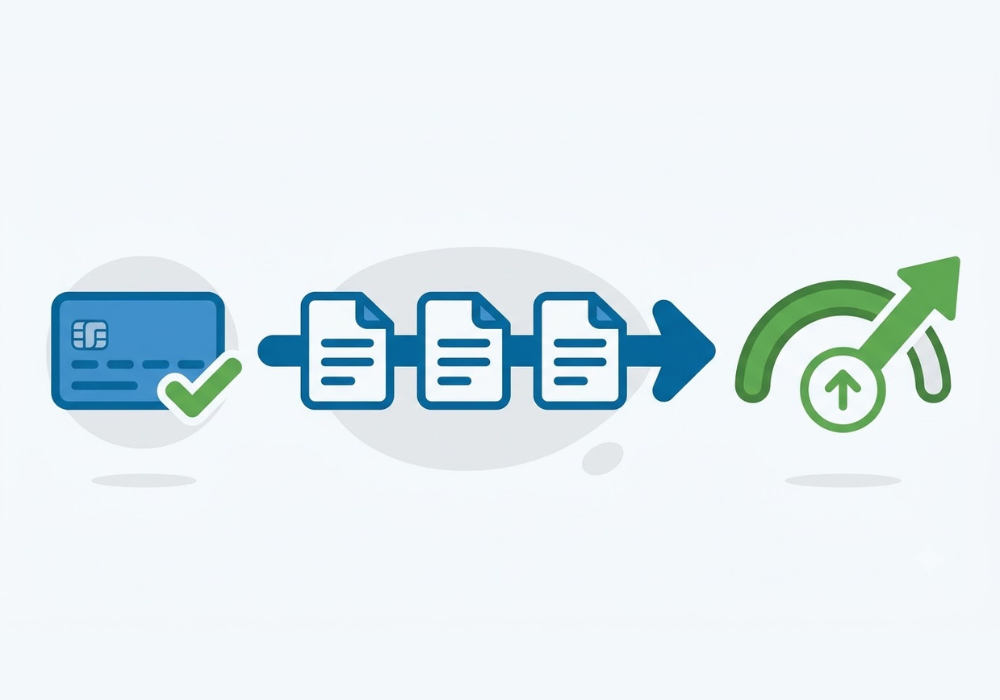
Here is how the card moves those numbers in your favor:
- It reports to the credit bureaus. The best credit builder cards report to all three bureaus, Experian, Equifax, and TransUnion. Single-bureau reporting builds your file more slowly, so this is the first thing to confirm.
- On-time payments build payment history. Each on-time payment adds a positive mark, strengthening the biggest factor in your score.
- Low balances keep utilization down. Using only a small portion of your limit signals responsible use.
As for timing, once your account starts reporting you may see changes within one to two billing cycles. A more noticeable improvement usually takes three to six months of consistent, on-time use, with stronger results over six to twelve months.
The two types: secured vs. modern credit builder cards
This is the distinction that trips people up, because two very different products go by similar names.
| Feature | Traditional secured card | Modern credit builder card |
|---|---|---|
| Deposit | Refundable deposit that sets your credit limit | Often none; you add your own spendable funds |
| Credit check | Sometimes required | Often none |
| Interest / APR | May apply if you carry a balance | Often none, since you spend money you loaded |
| Fees | Some charge an annual fee | Some charge a monthly subscription fee |
| Graduation | Can upgrade to unsecured, deposit refunded | Varies by provider |
| Best for | Building or rebuilding with a traditional card | Accessible, no-check building tied to your own money |
Traditional secured cards work like a regular credit card with one twist: you put down a refundable security deposit, often equal to your credit limit. Deposit $300 and you typically get a $300 limit. The deposit lowers the issuer’s risk, which is why approval is easy even with poor or no credit, and you can often get it back and graduate to an unsecured card after a period of responsible use.
Modern credit builder cards work more like a debit card that builds credit. Instead of locking a deposit, you add your own money, and that becomes what you can spend. Many require no credit check, charge no interest because you are spending funds you loaded, and automatically report your activity. The trade-off is that some charge a monthly subscription fee, so read the fine print.
What to look for in a credit builder card
Not all credit builder cards are equally good. Prioritize these features:
- Reports to all three bureaus. This is non-negotiable. Confirm it before you apply.
- Low or no fees. Many strong options have no annual fee, so your money goes toward building credit, not fees. Watch for monthly subscription charges on some modern cards.
- No credit check, if your credit is thin or damaged, for easier approval.
- A refundable deposit or no deposit, so your money is not lost.
- A graduation path, meaning the ability to upgrade to an unsecured card and get your deposit back.
- Low or no APR, which matters only if you ever carry a balance, though you should aim not to.
The best credit builder cards in 2026
Several strong options stand out this year. These are examples of what to consider, not personal recommendations, and terms and fees change, so verify current details before applying.
- Best with no credit check: the Chime Credit Builder Secured Visa is popular for requiring no credit check, no annual fee, and no minimum deposit, with no interest, while reporting to all three bureaus.
- Best no-deposit card with rewards: the Current Build Card requires no credit check and no minimum deposit, charges no annual fee, and can earn points on eligible purchases.
- Best with no bank account required: the OpenSky Secured Visa requires no bank account and no credit check and reports to all three bureaus, making it one of the most accessible options for rebuilding.
- Best traditional secured card with a graduation path: the Capital One Platinum Secured card accepts partial deposits, reports to all three bureaus, and offers potential deposit refunds and credit limit increases with responsible use.
- Best card plus loan combo: the Self Visa Credit Card pairs with a credit-builder loan and requires a relatively low deposit, letting you build both revolving and installment history in one place.
One note on a well-known option: the Discover it Secured card, long a favorite for its rewards and automatic graduation review, had new applications paused in mid-2026 following Discover’s acquisition, with a relaunch planned later in the year. Check its current status before counting on it.
Credit builder card vs. credit builder loan
A credit builder card is not the only tool for building credit. A credit builder loan is a close cousin worth knowing.
| Feature | Credit builder card | Credit builder loan |
|---|---|---|
| Type of credit built | Revolving | Installment |
| How it works | You spend and pay the bill monthly | You make fixed monthly payments into a locked savings account, then get the money back |
| Approval | Easy, often no credit check | Near-guaranteed, no credit check |
| Best for | Flexibility and ongoing use | Predictable, fixed payments |
The two build different types of credit, so using both at once diversifies your credit mix and can produce faster results. Many credit-building platforms now offer both a card and a loan together.
How to use a credit builder card to build credit fast
Once you have the right card, these habits do the heavy lifting:
- Make small, regular purchases. Put a recurring bill or a small expense on the card so it stays active.
- Pay on time, every time. Set up autopay so you never miss a due date, since payment history is the biggest factor.
- Keep your balance low. Aim to use less than 30% of your limit, and ideally under 10%, to keep utilization down.
- Pay in full to avoid interest. On a traditional secured card, carrying a balance costs you money for no credit benefit.
- Be patient and consistent. Let the account report month after month, and resist closing it too soon.
- Graduate when you can. Once eligible, upgrade to an unsecured card and reclaim your deposit.
Common mistakes to avoid
- Not confirming three-bureau reporting. A card that reports to only one bureau builds credit far more slowly.
- Carrying a balance. On cards that charge interest, this costs money without helping your score.
- Ignoring fees. Some cards carry high annual or subscription fees that eat into the benefit.
- Running up high utilization. Using most of your limit can hurt your score even if you pay on time.
- Missing payments. A single late payment can undo months of progress.
- Closing the account too early. Keeping it open preserves your credit history and available credit.
How long does it take to build credit with a credit builder card?
Expect a gradual climb, not an overnight jump. Your activity may start appearing on your credit report within one to two billing cycles once the account reports. Most people see a noticeable improvement after three to six months of on-time payments and low balances, with stronger, more durable results over six to twelve months. Consistency is what matters most.
Frequently asked questions
What is a credit builder card?
It is a credit card designed to help people with no credit or poor credit build a positive credit history. It reports your on-time payments and low balances to the credit bureaus, and it is easier to qualify for than a standard card, with many requiring no credit check.
How does a credit builder card work?
You use the card for purchases and pay the bill, and the issuer reports your activity to the credit bureaus. On-time payments and low balances build your credit over time. Traditional secured cards use a refundable deposit as your limit, while modern builder cards link to your own money.
Do credit builder cards really work?
Yes, when used responsibly and when the card reports to all three bureaus. Consistent on-time payments and low utilization can raise your score within a few months, since those are the two biggest factors in your credit score.
What is the difference between a secured card and a credit builder card?
A traditional secured card requires a refundable deposit that becomes your credit limit and may charge interest. A modern credit builder card often links to your own spendable funds with no locked deposit, no credit check, and no interest, working more like a debit card that builds credit.
How long does it take to build credit with a credit builder card?
Activity can appear on your credit report within one to two billing cycles. Most people see a noticeable improvement after three to six months of responsible use, with stronger results over six to twelve months.
Do credit builder cards require a credit check?
Many do not. A large share of credit builder cards, especially modern ones and no-credit-check secured cards, approve you without a hard credit inquiry, which makes them accessible if your credit is limited or damaged.
Can I get my deposit back from a credit builder card?
Yes, with a traditional secured card the deposit is refundable, typically returned when you close the account in good standing or graduate to an unsecured card. Modern credit builder cards that use your own funds generally let you withdraw unspent money.
This article is for educational purposes only and is not financial advice, and any cards mentioned are examples, not recommendations. Card terms, fees, deposit requirements, and availability change frequently. Confirm that a card reports to all three credit bureaus and verify current terms directly with the issuer before applying.

This Post Has One Comment