Quick answer: Credit reporting agencies, also called credit bureaus or consumer reporting companies, are businesses that collect your borrowing and payment history to create your credit reports. The three nationwide agencies are Equifax, Experian, and TransUnion. Importantly, they do not make lending decisions or calculate your credit score, they simply compile the data that lenders and scoring models use. Because lenders report to one, two, or all three, your reports can differ between them. Under the Fair Credit Reporting Act, you have the right to free weekly credit reports at AnnualCreditReport.com, to dispute errors for free, and to freeze your credit file.
Three companies you have probably never done business with directly hold enormous power over your financial life. They quietly shape your ability to get a loan, rent an apartment, and sometimes even land a job. Understanding who credit reporting agencies are, how they work, and what rights you have is one of the most valuable things you can do to protect your finances. This guide explains it all.
What is a credit reporting agency?
A credit reporting agency is a company that collects and organizes information about your credit history, then shares it with lenders and other authorized parties. You will also hear them called credit bureaus or consumer reporting companies, and all three terms mean the same thing.
Their job is to gather data from banks, credit card companies, auto lenders, mortgage lenders, and public records, then compile it into your credit reports, a detailed record of how you have borrowed and repaid money. Lenders use these reports to decide whether to extend credit to you and on what terms. In short, credit reporting agencies are the record-keepers of the borrowing world.
The three credit reporting agencies
There are three nationwide credit reporting agencies in the United States. They perform the same core function but operate independently and may hold slightly different information about you.
- Experian. The largest of the three by revenue, Experian also offers consumer tools like free credit monitoring and Experian Boost, which lets you add on-time utility, phone, and streaming payments to your Experian file to potentially improve your score.
- Equifax. The second-largest bureau, Equifax is also well known for its workforce and employment verification services used by employers.
- TransUnion. TransUnion provides credit reports and a range of monitoring and fraud-protection tools through its consumer service center.
All three collect similar data and follow the same federal rules, but because they are separate companies, the details they hold can vary.
How credit reporting agencies work
The system runs on a steady flow of information.
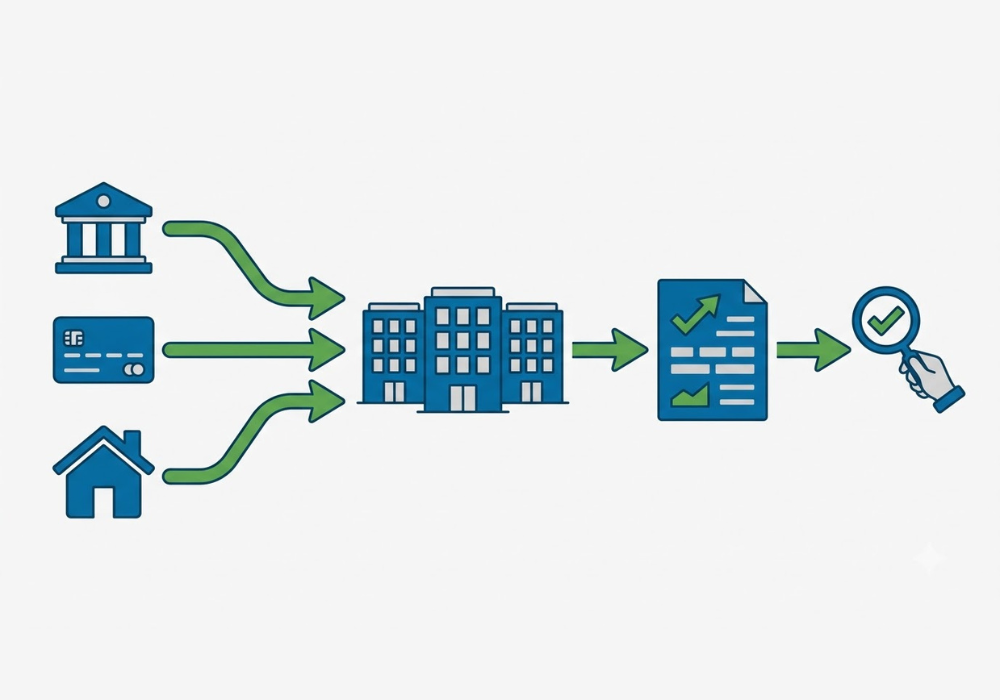
It works like this. When you open and use credit accounts, your lenders, known as data furnishers, periodically send your account information to the credit reporting agencies, including your balances, payment history, and whether you pay on time. The agencies compile that incoming data into your credit report. Then, when you apply for a loan or credit card, the lender requests your report from one or more of the agencies and uses it, often along with a credit score, to make a decision.
Crucially, furnishers are not required to report to all three agencies. They can choose to report to one, two, or all three, which is why your reports are not identical.
What credit reporting agencies do NOT do
This is one of the most misunderstood parts of the system, so it is worth being clear. Credit reporting agencies do two things they are often wrongly blamed or credited for, and here is the truth:
- They do not make lending decisions. The bureaus only supply your report. The lender decides whether to approve you.
- They do not calculate your credit score. Your score is produced by separate scoring models, like FICO and VantageScore, which analyze the data in your credit report. The bureau holds the data, but the scoring model creates the score.
Understanding this distinction matters, because it tells you where to focus. To improve your standing, you work on the information in your reports, which is what the scores are built from.
Why your three credit reports and scores can differ
Because each agency operates independently and lenders choose which ones to report to, the three agencies may hold different information about you. One account might appear on your Experian report but not your TransUnion report, for example. Since credit scores are calculated from the data in a specific report, those differences can produce different scores across the three bureaus.
This is exactly why it is smart to check all three reports rather than assuming they match. An error or a sign of fraud might appear on only one of them.
Who regulates credit reporting agencies
Credit reporting agencies are not unregulated. The primary law governing them is the Fair Credit Reporting Act (FCRA), a federal law that protects consumers by guaranteeing your right to access your reports, dispute inaccuracies, and limit who can view your information. It also requires that anyone who takes an adverse action against you based on your report, like denying a loan, notify you.
Oversight comes from the Consumer Financial Protection Bureau (CFPB), which monitors the agencies’ compliance with the FCRA and investigates consumer complaints. Together, the law and the regulator give you meaningful rights.
Your rights under the FCRA
The FCRA gives you several important protections:
- Access your credit reports, including free copies as described below.
- Dispute inaccurate information for free, and have it investigated.
- Be notified when your report is used against you, such as in a loan denial.
- Limit who can access your report to those with a permissible purpose, like lenders and landlords.
- Place a free credit freeze or fraud alert to protect against identity theft.
How to get your free credit reports
Here is a genuinely valuable, money-saving fact: you can get your credit reports for free, and there is one official place to do it. AnnualCreditReport.com is the federally authorized website, jointly operated by the three agencies, where you can get free credit reports from all three. While federal law guarantees one free report per agency every 12 months, the agencies now provide free reports weekly through this site.
A few things to know:
- Go through AnnualCreditReport.com, not the agencies directly, for the free reports. Be cautious of look-alike sites that try to sell you subscriptions.
- These reports show your credit data, not your credit score. Your score is a separate product, though many banks and card issuers now offer it free.
- Checking your own report is a soft inquiry and never hurts your credit score, so review it as often as you like.
Reviewing all three reports regularly is the single best habit for catching errors and spotting identity theft early.
How to dispute an error on your credit report
If you find an account you do not recognize, a wrong balance, or a payment marked late that you paid on time, you have the legal right to dispute it, for free. Here is how:
- Identify the error and gather any documentation that supports your case.
- File a dispute with the agency reporting the error, which you can do online, by phone, or by mail. Each agency has its own dispute process.
- Dispute with all three if the same error appears on all of your reports.
- Wait for the investigation. The agency typically has about 30 days to investigate, during which it contacts the furnisher to verify the information.
- Review the outcome. Based on the investigation, the agency will correct, delete, or keep the information, and must tell you the result.
Disputing is not just asking a favor, it is exercising a right the FCRA gives you.
How to protect your credit file
Beyond checking and disputing, you can actively protect your file:
- Freeze your credit. A free credit freeze restricts access to your report, making it much harder for identity thieves to open accounts in your name. You can lift it anytime.
- Set a fraud alert. A free fraud alert tells lenders to take extra steps to verify your identity, and placing one with a single agency is shared with the other two.
- Monitor regularly. Reviewing your reports and watching for alerts helps you catch problems before they cause damage.
Frequently asked questions
What are credit reporting agencies?
Credit reporting agencies, also called credit bureaus or consumer reporting companies, are businesses that collect your borrowing and payment history and compile it into credit reports that lenders use. The three nationwide agencies are Equifax, Experian, and TransUnion.
Who are the three credit reporting agencies?
The three nationwide credit reporting agencies are Equifax, Experian, and TransUnion. They perform the same core function of collecting credit data and creating reports, but they operate independently and may hold slightly different information about you.
Do credit reporting agencies decide my credit score?
No. Credit reporting agencies collect and hold your credit data, but they do not calculate your credit score or make lending decisions. Separate scoring models like FICO and VantageScore create your score from the data in your report, and lenders decide whether to approve you.
Why are my credit reports different across the three agencies?
Because lenders are not required to report to all three agencies and can choose which ones they report to, each agency may hold different information about you. Since scores are calculated from a specific report, those differences can also produce different scores.
How do I get my free credit reports?
Go to AnnualCreditReport.com, the official site jointly operated by the three agencies, where you can get free credit reports from all three every week. Avoid look-alike sites, and note that these reports show your credit data but not your credit score.
How do I dispute an error with a credit reporting agency?
File a dispute with the agency reporting the error, online, by phone, or by mail, and dispute with all three if the error appears on each. The agency typically has about 30 days to investigate, after which it will correct, delete, or keep the information and tell you the result.
Does checking my credit report hurt my score?
No. Checking your own credit report or score is considered a soft inquiry and never affects your credit score. You can review your reports as often as you like, which is a good habit for catching errors and fraud early.
This article is for educational purposes only and is not financial or legal advice. Rules, agency tools, and processes can change over time. For your rights and the official free report source, refer to AnnualCreditReport.com and the Consumer Financial Protection Bureau, and consider consulting a qualified professional about your specific situation.