
Quick answer: Mortgage pre-approval is a lender’s conditional commitment to lend you up to a specific amount, based on a verified review of your credit, income, and assets. Unlike pre-qualification, which is a rough estimate from self-reported information and a soft credit check, pre-approval involves a hard credit pull and document verification, and it produces a pre-approval letter that shows sellers you are a serious, vetted buyer. In 2026’s competitive market, most sellers will not take an offer seriously without one. The hard inquiry typically lowers your credit score by less than 5 points, letters are usually valid for 60 to 90 days, and you will need documents like pay stubs, W-2s, tax returns, and bank statements.
In today’s housing market, a pre-approval letter is your ticket to making a real offer. Without one, many sellers will not even consider your bid, and you risk falling in love with a home you cannot actually finance. Yet many buyers confuse pre-approval with pre-qualification and lose out as a result. This guide explains exactly what mortgage pre-approval is, how it works in 2026, what documents you need, how it affects your credit, and how to get one.
What is mortgage pre-approval?
Mortgage pre-approval is a lender’s assessment that you qualify to borrow up to a certain amount for a home, based on a thorough, verified review of your finances. To issue a pre-approval, a lender checks your credit with a hard inquiry and reviews documentation of your income, assets, and debts. If you qualify, they give you a pre-approval letter stating the maximum loan amount you are approved for, and often an estimated interest rate.
It is important to understand that pre-approval is a conditional commitment, not a final guarantee. Final approval comes later, once you have chosen a specific home and the lender completes full underwriting, including an appraisal. But pre-approval is the step that turns you from a browser into a buyer sellers will take seriously.
Pre-approval vs. pre-qualification
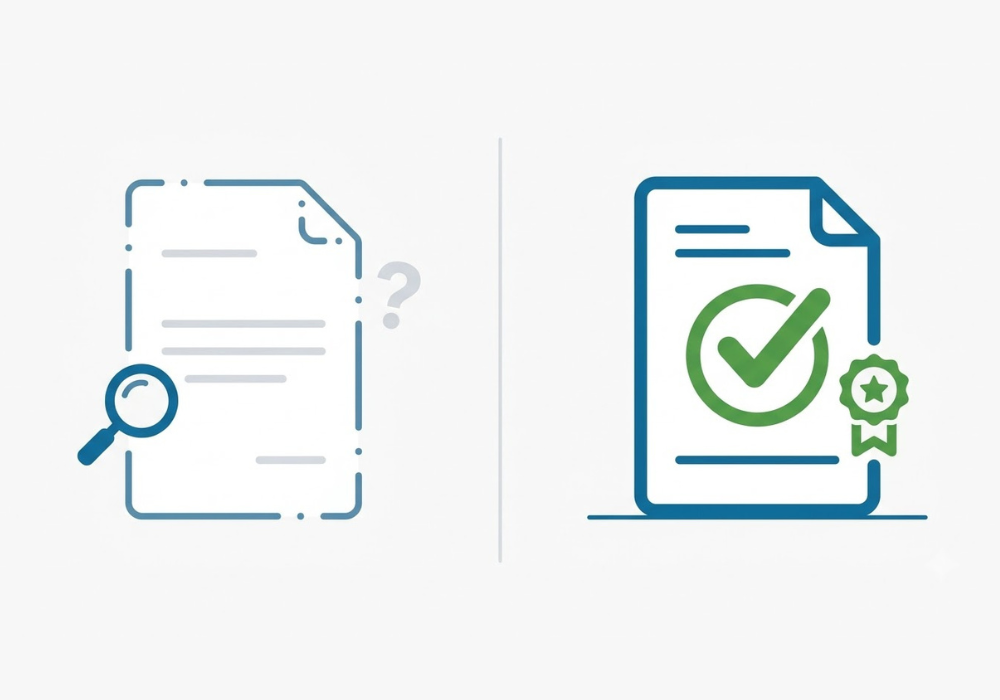
These two terms get used interchangeably, but the difference is huge, and confusing them can cost you a home.
| Feature | Pre-qualification | Pre-approval |
|---|---|---|
| Based on | Self-reported information | Verified documents |
| Credit check | Usually a soft pull, no score impact | A hard pull, small temporary impact |
| Strength | A rough estimate | A conditional commitment with a letter |
| How sellers view it | Carries little weight for offers | Shows you are a serious, vetted buyer |
| Best for | Early budgeting | Making a real offer |
Pre-qualification is a quick, informal estimate of how much you might borrow, based on what you tell the lender and usually a soft credit check that does not affect your score. It is useful early on for budgeting. Pre-approval is the real thing: the lender verifies your finances and pulls your credit, then commits to a specific amount in writing. In 2026, pre-qualification is essentially useless for making an offer, while pre-approval is what sellers expect to see.
Why mortgage pre-approval matters
Getting pre-approved does several important things at once:
- It sets your true budget. You learn the actual loan amount and monthly payment you qualify for, so you shop for homes you can genuinely afford.
- It makes your offer competitive. A pre-approval letter tells sellers a lender has vetted you and you can secure financing, which is a major advantage in a competitive market and often a requirement to have your offer considered.
- It speeds up final approval. Because the lender has already reviewed much of your information, the path to closing is faster once you are under contract.
- It surfaces problems early. If there is an issue with your credit or finances, you find out before you fall in love with a house, giving you time to fix it.
Does mortgage pre-approval hurt your credit?
This worries many buyers, but the impact is small. Pre-approval requires a hard credit inquiry, which typically lowers your credit score by less than 5 points, with recovery usually within 2 to 3 months. Hard inquiries stay on your credit report for 2 years but only affect your FICO score for 12 months.
There is also an important protection for shoppers. When you apply with multiple mortgage lenders within a short window, generally about 45 days, the credit scoring models count those inquiries as a single hard pull. That means you can and should compare several lenders without stacking up damage to your score. Lenders typically pull a tri-merge credit report, drawing from all three bureaus, Experian, Equifax, and TransUnion, for the most complete picture.
The bottom line: the small, temporary credit dip is far outweighed by the benefits of knowing your budget and being able to make a real offer.
What documents do you need for pre-approval?
Because pre-approval involves verification, you will need to provide documentation. Gathering these in advance speeds things up:
- Pay stubs from the last 30 days.
- W-2 forms from the past 2 years.
- Tax returns from the past 2 years, all pages, which are especially important if you are self-employed.
- Bank statements from the last 2 months, to verify assets and your down payment.
- Photo ID.
- Proof of additional assets or income, if applicable.
Self-employed buyers and those with variable income should expect to provide extra documentation, such as profit-and-loss statements or additional years of returns.
What lenders look at
When deciding your pre-approval, lenders weigh several factors:
- Credit score. Requirements vary by loan type. Conventional loans generally want a score around 620 or higher, while FHA loans can allow lower scores with a larger down payment. A higher score earns a better interest rate.
- Debt-to-income ratio (DTI). Lenders compare your monthly debt payments to your income, and generally prefer a DTI at or below 43%, with lower being better.
- Income and employment stability. A steady income history, often about two years, reassures lenders you can repay.
- Assets and down payment. Your savings and the size of your down payment affect both approval and your loan terms.
How to get pre-approved, step by step
- Check and prepare your finances. Review your credit, and address any errors or issues before applying.
- Gather your documents. Have pay stubs, W-2s, tax returns, and bank statements ready.
- Compare and apply with multiple lenders. Apply with at least a few lenders, including banks, credit unions, and online lenders, within a roughly 45-day window so the inquiries count as one.
- Let the lender verify and pull credit. They review your documents and run a hard inquiry.
- Receive your pre-approval letter. It states your maximum loan amount and often an estimated rate.
- Shop within your budget and include the letter when you make an offer.
How long does pre-approval take and last?
Speed has improved dramatically. Digital lenders can often issue a real pre-approval letter within minutes to 24 hours, while traditional lenders may take a few business days. Once issued, a pre-approval letter is typically valid for 60 to 90 days. If it expires before you find a home, the lender can re-verify your information and issue an updated letter, which is routine.
Pre-approval vs. final approval, and what not to do
Remember that pre-approval is conditional. Final approval happens after you are under contract on a specific home, when the lender completes underwriting, orders an appraisal, and confirms the details. Between pre-approval and closing, protect your loan by avoiding financial moves that change your profile:
- Do not take on new debt, such as a car loan or new credit card.
- Do not make large purchases that draw down your savings or raise your debt.
- Do not change jobs if you can avoid it, since income stability matters.
- Do not miss payments or let your credit slip.
Any of these can reduce your approved amount or even derail your loan right before closing.
Tips to strengthen your pre-approval
- Improve your credit score before applying, since a higher score means a better rate and a larger approval.
- Lower your debt-to-income ratio by paying down debts.
- Save a larger down payment, which strengthens your application and can improve terms.
- Have your documents ready, so the process is fast and smooth.
- Compare multiple lenders within the shopping window to find the best rate without extra credit damage.
Frequently asked questions
What is mortgage pre-approval?
Mortgage pre-approval is a lender’s conditional commitment to lend you up to a specific amount, based on a verified review of your credit, income, and assets. It involves a hard credit check and produces a pre-approval letter that shows sellers you are a serious, financed buyer.
What is the difference between pre-approval and pre-qualification?
Pre-qualification is a rough estimate based on self-reported information and usually a soft credit check with no score impact. Pre-approval is stronger, involving document verification and a hard credit pull, and it results in a letter you can use to make a real offer.
Does mortgage pre-approval hurt your credit score?
Yes, but only slightly. The hard inquiry typically lowers your score by less than 5 points, with recovery in about 2 to 3 months. Multiple mortgage inquiries within roughly 45 days count as a single hard pull, so you can shop lenders safely.
What documents do I need for mortgage pre-approval?
You typically need pay stubs from the last 30 days, W-2s from the past 2 years, tax returns from the past 2 years, bank statements from the last 2 months, and a photo ID. Self-employed buyers should expect to provide additional income documentation.
How long does a mortgage pre-approval last?
A pre-approval letter is usually valid for 60 to 90 days. If it expires before you find a home, the lender can re-verify your finances and issue an updated letter, which is a normal part of the process.
How long does it take to get pre-approved?
It varies by lender. Digital lenders can issue a pre-approval letter within minutes to 24 hours, while traditional banks and credit unions may take a few business days, especially if additional documentation is needed.
What should I avoid after getting pre-approved?
Avoid taking on new debt, making large purchases, changing jobs, or missing payments between pre-approval and closing. These can change your financial profile and reduce your approved amount or jeopardize your final loan approval.
This article is for educational purposes only and is not financial or mortgage advice. Loan requirements, rates, credit thresholds, and lender policies vary and change over time. Verify current details directly with lenders and consider consulting a licensed mortgage professional before applying.
