
Quick answer: Here is how to build credit: open at least one account that reports to the three credit bureaus, such as a secured credit card, a credit-builder loan, or a credit builder card, or become an authorized user on a trusted person’s card. Then use it responsibly by paying on time every month and keeping your balances low. It typically takes about six months of activity to generate your first credit score, and 12 months or more to reach good credit. The two biggest factors are your payment history and your credit utilization, and you can also get credit for payments you already make, like rent and utilities.
Credit touches almost every part of adult financial life, from getting an apartment to a car loan to sometimes even a job. But building it for the first time feels like a catch-22: you need credit to get credit. The good news is there is a clear, proven path out of that loop, and you do not need a lot of money to start. This guide walks through exactly how to build credit from scratch in 2026, the best methods, the habits that matter, and how long it takes.
What does it mean to build credit?
Building credit means establishing a track record of borrowing and repaying money that lenders can see and evaluate. If you have never used credit, you are what the industry calls “credit invisible,” meaning there is no history for a lender to judge. Millions of Americans are in this position, and it is different from having bad credit, you simply have no record yet.
To change that, you need at least one credit account that reports your activity to the major credit bureaus. Once an account reports for about six months, the scoring models have enough data to generate your first credit score. From there, consistent good habits grow that score over time.
How credit scores work
Before you start, it helps to know what you are actually building. Your FICO credit score is made up of five factors, and understanding their weight tells you where to focus.
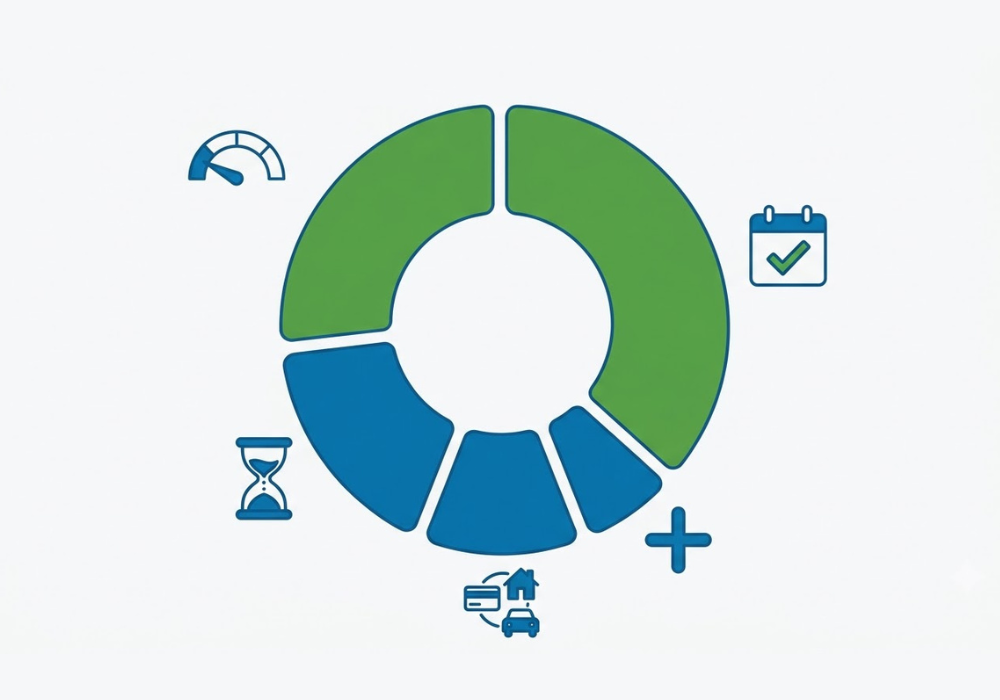
| Factor | Share of your FICO score |
|---|---|
| Payment history | 35% |
| Credit utilization (amounts owed) | 30% |
| Length of credit history | 15% |
| Credit mix | 10% |
| New credit | 10% |
The takeaway is clear: paying on time and keeping your balances low together drive about 65% of your score. Those two habits matter more than anything else, so every method below works only if you pair it with them.
The best ways to build credit from scratch
There are several beginner-friendly tools, and the fastest results often come from combining two or three. Here is how they compare.
| Method | How it works | Best for |
|---|---|---|
| Secured credit card | A refundable deposit sets your credit limit | No credit, easiest approval |
| Credit builder card | Linked to your own funds, often no credit check | No-credit-check building |
| Credit-builder loan | You pay into a locked savings account, then receive the money at the end | Building installment history |
| Authorized user | You are added to a trusted person’s existing card | A fast start with family help |
| Student credit card | An unsecured card for college students | Students with no history |
| Rent and utility reporting | Reports bills you already pay to the bureaus | Getting credit for existing payments |
Secured credit cards are the single most reliable starting point. You put down a refundable deposit, often around $200, which becomes your credit limit, and the card reports to all three bureaus just like a regular card. Many let you graduate to an unsecured card after six to twelve months of on-time payments.
Credit builder cards work similarly but often require no credit check and link to your own funds, making them accessible if you cannot qualify elsewhere.
Credit-builder loans are designed specifically for this purpose. The lender holds a small loan amount in a savings account while you make monthly payments, reporting them to the bureaus, then releases the money to you at the end. They add installment history, which diversifies your credit mix. Credit unions often offer the lowest-cost versions.
Becoming an authorized user is one of the fastest legitimate methods. If a parent or trusted person with a long, well-managed card adds you, that account’s positive history can appear on your report, giving you a head start without opening anything yourself.
Student cards are a good fit for college students, offering an unsecured card with no deposit despite a thin file.
Rent and utility reporting lets you get credit for payments you already make. Services that report your rent, and tools like Experian Boost that add utility, phone, and streaming payments, can create positive history without new borrowing.
For the fastest results, many people combine methods, for example a secured card plus a credit-builder loan plus rent reporting, which builds several streams of positive history at once.
The habits that actually build credit
The tool only works if you use it well. These habits do the heavy lifting:
- Pay on time, every time. Payment history is the biggest factor, so set up autopay for at least the minimum to never miss a due date.
- Keep your balances low. Use less than 30% of your available credit, and ideally under 10%, since high utilization can hold your score down even when you pay on time.
- Do not apply for too much at once. Each application can cause a small, temporary dip, and several at once signals risk.
- Keep your accounts open. Length of credit history matters, so hold onto your first account even after you qualify for better ones.
- Monitor your credit. Checking your own reports is free and does not hurt your score.
How long does it take to build credit?
Patience is part of the process. As a rough timeline, it takes about three to six months of activity to generate your first credit score, six to twelve months to show meaningful improvement, and often twelve to twenty-four months to reach the good credit range, roughly 670 to 739. Your starting point, credit mix, and consistency all affect the pace. The key is steady, on-time activity month after month, which is what turns a thin file into a solid score.
How to check your credit for free
As you build, track your progress. You can get your credit reports for free from all three bureaus at AnnualCreditReport.com, the official site, and checking your own report is a soft inquiry that never affects your score. Many banks and card issuers also show your credit score for free. Reviewing your reports regularly helps you confirm your accounts are reporting correctly and catch any errors or fraud early.
Common mistakes to avoid
- Missing payments, which is the single most damaging mistake and can undo months of progress.
- Maxing out your cards, which spikes your utilization and lowers your score.
- Applying for several accounts at once, which stacks hard inquiries.
- Closing your first card, which shortens your credit history and reduces available credit.
- Assuming a debit card builds credit. It does not, because no borrowing is involved. You need a credit product that reports to the bureaus.
Building credit vs. repairing credit
It is worth knowing the difference. Building credit means starting from scratch with no history, establishing positive accounts for the first time. Repairing credit means improving a score that has been damaged by missed payments, high balances, or other negative marks. The tools overlap, since secured cards and on-time payments help in both cases, but repairing credit also involves addressing existing negatives, like disputing errors and paying down debt. If you already have a damaged score rather than no score, your focus shifts toward recovery alongside these building habits.
Frequently asked questions
How do I build credit from scratch?
Open at least one account that reports to the credit bureaus, such as a secured credit card, a credit-builder loan, or a credit builder card, or become an authorized user on a trusted person’s card. Then pay on time every month and keep your balances low, and your first score should appear in about six months.
How long does it take to build credit?
It typically takes about three to six months of activity to generate your first credit score, six to twelve months to show meaningful improvement, and twelve to twenty-four months to reach the good credit range of roughly 670 to 739. Consistency and on-time payments drive the pace.
What is the easiest way to build credit with no history?
A secured credit card is usually the easiest and most reliable starting point, since it requires only a refundable deposit and is easy to get approved for. Becoming an authorized user and opening a credit-builder loan are also very accessible with no credit history.
Does a debit card build credit?
No. Debit cards pull money directly from your checking account with no borrowing involved, so there is nothing to report to the credit bureaus. To build credit, you need a credit product like a secured card, credit builder card, or credit-builder loan.
Can I build credit without a credit card?
Yes. Credit-builder loans, becoming an authorized user, and rent or utility reporting services, including tools like Experian Boost, can all build credit without a traditional credit card by creating positive payment history the bureaus can see.
What builds credit the fastest?
Combining methods works fastest, such as a secured card plus a credit-builder loan plus rent reporting, which creates several streams of positive history at once. Above all, paying on time and keeping utilization low are what move your score the most.
How can I check my credit for free?
Get free credit reports from all three bureaus at AnnualCreditReport.com, the official site, and note that checking your own report is a soft inquiry that does not affect your score. Many banks and card apps also provide your credit score for free.
This article is for educational purposes only and is not financial advice, and any products mentioned are examples, not recommendations. Credit scoring factors, tools, and timelines vary by individual and change over time. Confirm that any account reports to all three credit bureaus and check your reports at AnnualCreditReport.com before relying on a product.
