
Quick answer: The best dividend ETFs of 2026 balance income, quality, and low cost. The Schwab U.S. Dividend Equity ETF (SCHD) is the most popular all-around pick, combining a yield around 3.4% with strong quality screens at a 0.06% expense ratio. The Vanguard High Dividend Yield ETF (VYM) offers the broadest diversification, VIG and DGRO focus on dividend growth with lower current yields but rising payouts, and HDV delivers a higher yield near 3.8% from a concentrated, quality portfolio. The right choice depends on whether you want more income now or growing income over time. One rule matters most: do not simply chase the highest yield, because an unusually high yield often signals a dividend at risk.
With the S&P 500’s dividend yield near record lows around 1.1%, income-focused investors are turning to dividend ETFs to earn meaningfully more from a single, low-cost fund. But the “best” dividend ETF is not the one with the biggest yield on paper, and picking wrong can mean buying a value trap or an expensive fund that erodes your capital. This guide compares the top dividend ETFs of 2026, explains what actually matters, and shows you how to choose the right one for your goals.
What is a dividend ETF?
A dividend ETF is an exchange-traded fund that holds a basket of dividend-paying stocks and passes the collected dividends on to you, typically on a quarterly or monthly schedule. Instead of researching and buying dozens of individual dividend stocks yourself, you buy one fund and gain instant exposure to a diversified portfolio, with the screening, weighting, and rebalancing handled for you.
That simplicity and diversification is why dividend ETFs are among the most popular tools for building passive income. But they are not all alike. Some chase the highest current yield, some target companies that grow their dividends over time, and some focus on quality or specific sectors, and those differences drive very different results.
What to look for in a dividend ETF
Before comparing specific funds, understand the criteria that separate a good dividend ETF from a risky one. This is where most beginners go wrong.
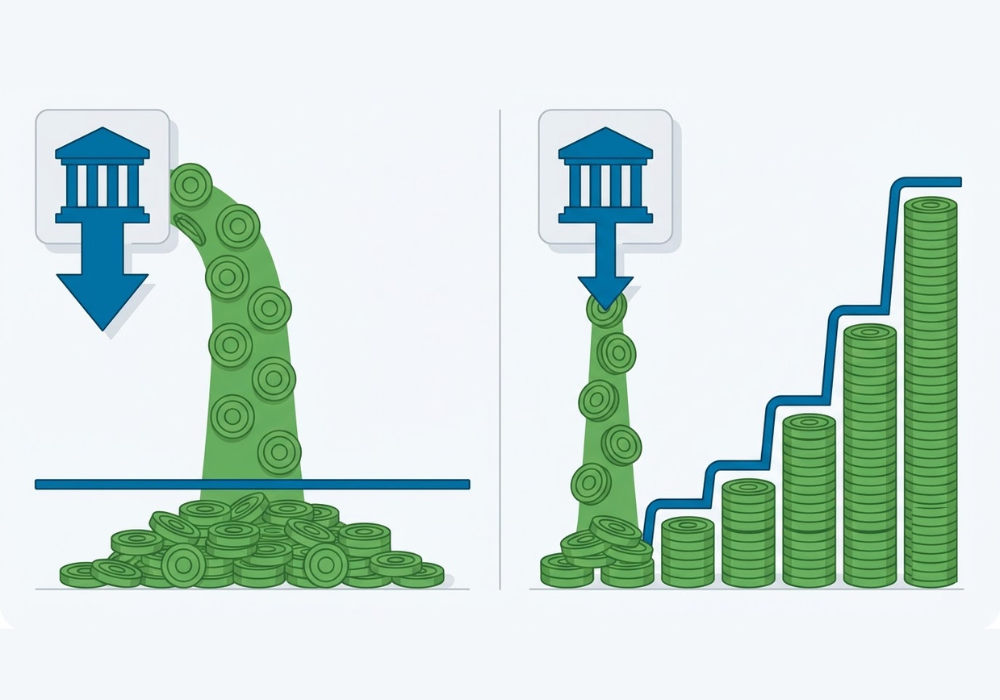
- Do not chase the highest yield. This is the most important rule. An unusually high yield often reflects a falling share price rather than a generous payout, and it can signal a dividend that is about to be cut. The best dividend ETFs use quality filters to avoid these value traps.
- Focus on total return, not just yield. Total return combines dividends and price appreciation. Dividend-growth funds with modest yields have often delivered better total returns over time than pure high-yield funds.
- Keep expense ratios low. The best dividend ETFs charge as little as 0.06% to 0.08% a year, so you keep almost all of the income. Be wary of funds charging 0.35% or more unless the strategy clearly justifies it.
- Check quality and diversification. Look at how many stocks the fund holds and how concentrated it is in sectors like financials, utilities, energy, and consumer staples.
- Note the payout frequency. Most dividend ETFs pay quarterly, though some pay monthly, which can matter if you rely on the income.
The best dividend ETFs of 2026
These funds are consistently ranked among the best by major analysts. Yields fluctuate with prices and are shown as approximate 2026 figures, so verify current numbers before investing.
| ETF | Focus | Approximate yield (2026) | Expense ratio | Best for |
|---|---|---|---|---|
| SCHD (Schwab U.S. Dividend Equity) | Quality plus income | About 3.4% | 0.06% | A core all-around dividend holding |
| VYM (Vanguard High Dividend Yield) | Broad high yield | About 2.2% | 0.06% | Wide diversification at low cost |
| VIG (Vanguard Dividend Appreciation) | Dividend growth | About 1.8% | 0.06% | Rising payouts over time |
| DGRO (iShares Core Dividend Growth) | Dividend growth | About 2.2% | 0.08% | A dividend-growth alternative |
| HDV (iShares Core High Dividend) | Higher yield plus quality | About 3.8% | 0.08% | More income from quality names |
SCHD: best overall
SCHD has earned a reputation as the gold standard of dividend ETFs. It screens for companies with at least 10 consecutive years of dividend payments, then ranks them on financial strength measures like free cash flow to debt, return on equity, dividend yield, and five-year dividend growth, selecting the top 100. This quality-first approach delivers a solid yield around 3.4% plus real capital appreciation, at a low 0.06% expense ratio. For many investors, if you buy just one dividend ETF, SCHD is the default choice.
VYM: best for broad diversification
The Vanguard High Dividend Yield ETF casts a much wider net than SCHD, holding hundreds of large U.S. companies with above-average yields. That broad exposure reduces the risk tied to any single company, at one of the lowest expense ratios in the category. Its yield is a bit lower, around 2.2%, which is the trade-off for its diversification, making it ideal for investors who want dividend exposure without concentration risk.
VIG: best for dividend growth
VIG takes a different angle, focusing on companies that have raised their dividends for at least 10 consecutive years. Its current yield is modest, around 1.8%, but the payout tends to grow steadily over time, so the income you collect can rise substantially over a long holding period. It suits investors with a long horizon who value a growing income stream over a high yield today.
DGRO: a dividend-growth alternative
DGRO is another strong dividend-growth option, screening for companies with a history of growing dividends and sound fundamentals. It offers a slightly higher current yield than VIG at a low 0.08% expense ratio, making it a solid alternative or complement for growth-focused income investors.
HDV: best for a higher yield with quality
HDV takes a focused approach, holding roughly 75 higher-yielding U.S. stocks that pass screens for economic moats and financial health. The result is a higher yield near 3.8%, with a heavier tilt toward sectors like energy and healthcare. It suits investors who want more income now but still want quality screening rather than pure yield chasing.
A caution on ultra-high-yield “covered-call” ETFs
You will inevitably encounter ETFs advertising eye-popping yields of 7%, 10%, or even 12%, such as covered-call funds. Understand what you are buying before you reach for them. These funds generate income by selling call options on their holdings, which can produce very high payouts but comes with real trade-offs: documented erosion of the fund’s value over time, higher expense ratios often around 0.35% to 0.60%, and distributions frequently taxed as ordinary income rather than at lower dividend rates.
In other words, these are income-extraction tools, not wealth-building vehicles, and that is a fundamentally different purpose. There is nothing wrong with using them if you understand the trade-offs, but beginners are generally better served starting with a quality fund like SCHD, VYM, or a dividend-growth ETF before exploring covered-call strategies.
Types of dividend ETFs
Stepping back, dividend ETFs fall into a few categories, and knowing them helps you choose:
- High-dividend-yield funds (like VYM and HDV) prioritize higher current income.
- Dividend-growth funds (like VIG and DGRO) target companies with rising payouts, offering lower yields now but growth over time.
- Quality or blended funds (like SCHD) screen for financial strength alongside yield and growth.
- International dividend funds (like VYMI) add exposure to higher-yielding overseas companies.
- Covered-call and high-income funds chase the highest payouts with the trade-offs described above.
How to choose the best dividend ETF for you
Match the fund to your goal:
- If you want more income now, lean toward higher-yield quality funds like SCHD or HDV.
- If you want growing income over decades, choose dividend-growth funds like VIG or DGRO.
- If you want maximum diversification, VYM casts the widest net.
- If you are focused on total return, quality-screened funds like SCHD have historically balanced income and growth well.
Many investors combine funds, for example pairing a quality core like SCHD with a dividend-growth fund, and simply reinvest the dividends to compound over time. Whatever you choose, weigh expense ratio, yield, holdings, and strategy together rather than fixating on yield alone.
The tax angle worth knowing
Dividends are taxable when held in a regular brokerage account. Qualified dividends are generally taxed at lower long-term capital gains rates, while income from covered-call funds is often taxed as ordinary income at your regular rate, which makes those funds less tax-efficient. A common strategy is to hold dividend ETFs, especially higher-income ones, inside a tax-advantaged retirement account so the income can grow with less tax drag. This is general information, not tax advice, so confirm your situation with a professional.
How to invest in dividend ETFs
- Open a brokerage or retirement account. Any major brokerage works, and a tax-advantaged account can improve after-tax returns.
- Choose a fund that matches your goal, whether that is income now, dividend growth, or broad diversification.
- Buy shares like any stock, and consider building a core-plus-complement mix.
- Reinvest your dividends through automatic dividend reinvestment to compound your returns over time.
- Hold for the long term and review annually rather than reacting to short-term yield swings.
Pros and cons of dividend ETFs
The upside:
- Steady passive income from a single, diversified fund.
- Instant diversification across dozens or hundreds of companies.
- Low cost, with the best funds charging around 0.06%.
- Less volatility than the broad market during downturns, in many cases.
The trade-offs:
- Dividends are not guaranteed and can be cut.
- They may underperform the broad market during growth-driven rallies, as many did over the past several years.
- Share prices still fluctuate, so your principal is not protected.
- Tax drag in a regular account, especially for higher-income funds.
Frequently asked questions
What is the best dividend ETF in 2026?
SCHD is the most popular all-around choice, combining a yield around 3.4% with strong quality screens at a low 0.06% expense ratio. VYM is best for broad diversification, VIG and DGRO for dividend growth, and HDV for a higher yield from quality companies. The best one depends on your income and growth goals.
Is a high yield always better in a dividend ETF?
No. An unusually high yield often reflects a falling share price rather than a generous payout, and it can signal a dividend at risk of being cut. The best dividend ETFs use quality screens to avoid these value traps, and dividend-growth funds often deliver better total returns.
What is the difference between a high-yield and a dividend-growth ETF?
A high-yield ETF prioritizes more income now, holding companies with above-average current yields. A dividend-growth ETF holds companies that steadily raise their dividends, offering a lower yield today but a payout that can grow substantially over time.
Are dividend ETFs a good investment?
They can be for income and stability, providing diversified passive income at low cost. However, dividends can be cut, prices still fluctuate, and they may underperform the broad market during growth rallies. Focusing on quality and total return, not just yield, improves your odds.
What is a good expense ratio for a dividend ETF?
The best dividend ETFs charge very little, roughly 0.06% to 0.08% a year, so you keep almost all the income. Covered-call and specialty funds can charge 0.35% or more, which is only worth it if the strategy clearly justifies the higher cost.
Should I be careful with ETFs yielding 10% or more?
Yes. Ultra-high yields usually come from covered-call funds that can erode in value over time, charge higher fees, and distribute income taxed at ordinary rates. They are income-extraction tools rather than wealth builders, so most investors should start with quality dividend ETFs first.
How are dividend ETFs taxed?
Qualified dividends are generally taxed at lower long-term capital gains rates, while covered-call fund income is often taxed as ordinary income. Holding dividend ETFs in a tax-advantaged retirement account can reduce the tax drag, especially for higher-income funds.
This article is for educational purposes only and is not financial, investment, or tax advice, and any funds mentioned are examples, not recommendations. Investing involves risk, including possible loss of principal, dividends are not guaranteed, and past performance does not predict future results. Yields and figures reflect 2026 and change over time. Verify current fund details and consider consulting a licensed financial or tax professional before investing.
