
Quick answer: Small business loans come in several forms, including SBA loans, bank term loans, business lines of credit, equipment financing, invoice factoring, and microloans. In 2026, SBA 7(a) rates run roughly 9.75% to 14.75%, bank loans average in the high single digits to low teens, and online lenders can charge anywhere from 14% to nearly 100%. The right loan depends on how much you need, what you need it for, your credit and revenue, and how fast you need funding. Bank and SBA loans offer the best rates but are the hardest to qualify for, while online lenders are faster and easier but cost far more.
Financing can be the difference between seizing an opportunity and watching it pass. But the small business lending market in 2026 is a study in contrasts: SBA lending hit a record high last fiscal year, yet big banks approve only a small fraction of applications. Choosing the right loan, and the right lender, matters more than ever. This guide breaks down every major loan type, current rates, what lenders actually require, and how to give yourself the best shot at approval.
How small business loans work
A small business loan is borrowed capital you repay over time, usually with interest, to fund operations, growth, equipment, or other needs. Lenders decide whether to approve you and at what rate based on your business’s finances and your personal credit.
One point trips up many first-time borrowers: the U.S. Small Business Administration does not lend money directly. Instead, the SBA guarantees a portion of a loan, typically 50% to 85%, that a bank, credit union, or approved lender originates. That guarantee lowers the lender’s risk, which is what lets them offer the low rates and long terms SBA loans are known for. Keep that in mind as we go, because it shapes how you apply.
The main types of small business loans
There are six common types, each suited to different needs.
SBA loans. Government-guaranteed loans with the best rates and longest terms, but more paperwork and slower funding. Best for established businesses that can wait for favorable terms.
Term loans. A lump sum repaid on a fixed schedule. Best for a one-time investment with a defined cost.
Business lines of credit. A revolving credit limit you draw on and repay repeatedly. Best for managing ongoing cash flow swings rather than a single purchase.
Equipment financing. A loan to buy equipment, where the equipment itself serves as collateral. Because of that collateral, approval is often easier.
Invoice factoring. You sell unpaid invoices to a company for immediate cash. Best for businesses with slow-paying clients and cash tied up in receivables.
Microloans. Small loans, often up to $50,000, issued through nonprofit intermediaries. Best for startups and very small or underserved businesses.
The most popular products reflect what businesses actually need. Lines of credit and term loans are the most sought-after, and the top reasons businesses borrow are covering operating expenses and funding expansion.
SBA loans explained
Because SBA loans are the gold standard for rates and terms, they deserve a closer look. There are a few key programs:
SBA 7(a). The most common and flexible. Use it for working capital, equipment, real estate, refinancing debt, inventory, or even buying another business. Loan amounts go up to $5 million, with terms up to 10 years for most uses and 25 years for real estate.
SBA 504. Built for major fixed assets like owner-occupied commercial real estate and heavy equipment. It offers long-term, fixed-rate financing up to roughly $5.5 million through a Certified Development Company alongside a bank, typically with about 10% down.
SBA Microloan. Up to $50,000 through nonprofit lenders, with an average loan size around $13,000. Often comes with business training and works well for startups.
SBA Express. A faster-processing option with guarantees up to $500,000, attractive when you need quicker access.
A notable 2026 update: effective March 1, 2026, the SBA removed the previously mandated minimum FICO Small Business Scoring Service (SBSS) score of 165 for loans of $350,000 or less. That lowers one barrier, though individual lenders may still apply their own credit screens, so lender fit still matters.
Current business loan rates in 2026
Rates vary widely by product and lender. The prime rate, which many business loans build on, sat around 6.75% in early 2026. Here is where the major options landed.
| Loan type or source | Typical 2026 rate | Notes |
|---|---|---|
| SBA 7(a) | About 9.75% to 14.75% | Capped by loan size; larger loans get lower rate caps |
| SBA 504 | Roughly 6% to 6.5% fixed | For fixed assets; tied to Treasury yields |
| Bank term loan | About 6.4% to 11% | Lowest rates, but the toughest to qualify for |
| Online lender | About 14% to 99% APR | Fast and easier to get, but far more expensive |
A useful quirk of SBA 7(a) pricing: bigger loans get cheaper money. Rate caps tighten as loan size rises, so a loan over $250,000 carries a lower maximum spread over prime than a loan of $50,000 or less. Lenders do not always charge the maximum, so comparing offers from several SBA-preferred lenders can save you real money.
One caution on online lenders: their speed and looser requirements come at a cost. In a recent Federal Reserve survey, 60% of borrowers who used online lenders said their actual borrowing costs were higher than expected, compared with about a third of bank borrowers. Always compare the total cost of capital, not just the advertised rate.
How to qualify: what lenders look for
Approval comes down to a handful of factors. Lenders weigh these together, so a weakness in one area can be offset by strength in another.
Credit score. Both your personal and business credit matter. SBA loans generally want around 650 or higher, community banks often 660 or more, while some online lenders work with scores as low as 550 to 580.
Time in business. This is one of the strongest predictors of approval. Most traditional loans require at least two years of operating history.
Revenue and cash flow. Lenders want to see that your business generates enough income to comfortably cover payments.
Collateral. Assets that secure the loan, such as equipment or real estate, improve your odds and your rate. Equipment financing is easier partly because the equipment is the collateral.
Personal guarantee. SBA loans require a personal guarantee from anyone who owns 20% or more of the business, putting your personal assets on the line.
A business plan. Larger and SBA loans often expect one, and it strengthens any application, especially for newer businesses.
Here is how the typical bar differs by lender type.
| Lender type | Typical minimum credit | Typical time in business | Funding speed | Relative cost |
|---|---|---|---|---|
| Large bank | 680+ | 2+ years | Slow (4 to 8 weeks) | Lowest |
| Community bank / credit union | 660+ | 2+ years | Moderate | Low |
| SBA (via a lender) | Around 650+ | Varies; some startup programs | Slow (weeks) | Low |
| Online lender | 550 to 580+ | 6 to 12+ months | Fast (same day to days) | Highest |
| Equipment financing | 580+ | Flexible | Fast to moderate | Moderate |
Your approval odds in 2026, by lender type
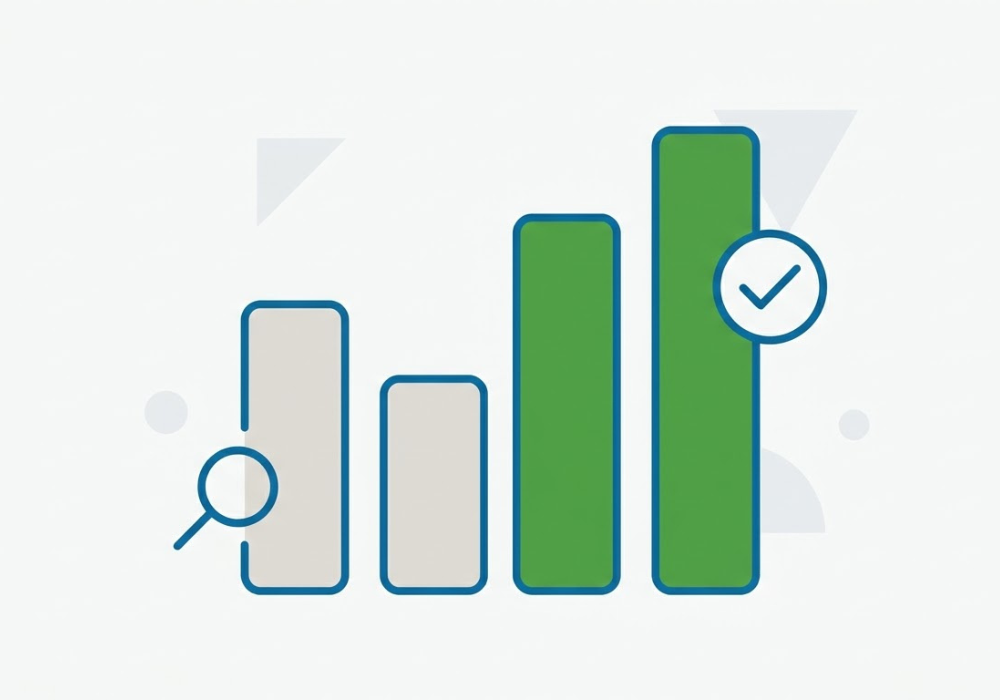
Where you apply dramatically changes your chances, and 2026 data makes that clear.
Big national banks approve only about 13% to 15% of small business loan applications, favoring businesses with strong credit, substantial revenue, and collateral. Smaller institutions are far friendlier: applicants at small banks had the highest full-approval rate of any lender type at 57%, and community banks and credit unions tend to be more relationship-oriented. Alternative and online lenders approve a higher share than big banks, roughly 25% to 30%, but at higher cost.
Overall, the business loan approval rate across all lender types climbed to about 52% in early 2026, up from 48% in 2024. Credit remains the great divider: borrowers with scores above 700 saw approval rates near 78%, versus about 31% for those under 600. The practical lesson is that community banks, credit unions, and SBA-preferred lenders are often worth the extra effort, because your odds and your rate are usually much better than at a big bank or an online lender.
How to choose the right loan for your need
Match the financing to the job:
Working capital or general operating expenses: a business line of credit or a term loan. A line of credit is better for recurring gaps, a term loan for a defined one-time need.
Buying equipment: equipment financing, or an SBA 504 loan for large purchases.
Commercial real estate: an SBA 504 loan, built for exactly this.
Cash flow tied up in unpaid invoices: invoice factoring.
Refinancing debt, acquiring a business, or flexible growth capital: an SBA 7(a) loan.
A startup or very small business: a microloan, an SBA program, or an online lender if you cannot meet bank requirements.
How to apply for a small business loan
Clarify your need. Know how much you need, what for, and how quickly. This points you to the right loan type.
Check your credit and finances. Review your personal and business credit, revenue, and time in business against typical requirements.
Gather your documents. Common requests include tax returns, bank statements, financial statements, and often a business plan.
Choose the right lender type. Weigh rate, approval odds, and speed. A community bank or SBA lender for the best terms, an online lender when you need speed.
Compare multiple offers. Look at the full cost of capital, including fees, not just the rate. Then apply and respond quickly to any lender requests.
Watch out for high-cost financing
Some fast-money products, especially merchant cash advances and certain short-term online loans, can carry effective annual costs reaching into the high double digits or beyond. They are easy to get and fast to fund, which is exactly why struggling businesses reach for them, sometimes making cash flow problems worse. Before signing, calculate the total dollar cost of repayment and the true annualized rate. If a lender is vague about the total cost, treat that as a warning sign.
Financing a startup or newer business
New businesses face the steepest climb. Nearly 60% of startup loan applications are declined, largely because most lenders want at least two years of history. If your business is young, your best paths are usually SBA microloans, other SBA programs designed for newer businesses, online lenders with lower time-in-business requirements, or financing secured by collateral like equipment. A strong business plan and solid personal credit carry extra weight when your business has little track record of its own.
Frequently asked questions
What types of small business loans are there? The main types are SBA loans, bank term loans, business lines of credit, equipment financing, invoice factoring, and microloans. Term loans suit one-time investments, lines of credit suit ongoing cash flow needs, and SBA loans offer the best rates for those who qualify.
What are business loan interest rates in 2026? SBA 7(a) rates run roughly 9.75% to 14.75%, bank loans average in the high single digits to low teens, and online lenders range widely from about 14% to nearly 100% APR. Your rate depends on the loan type, lender, and your business’s qualifications.
What credit score do I need for a business loan? SBA loans generally want around 650 or higher and community banks often 660 or more, while some online lenders accept scores as low as 550 to 580. Equipment financing may accept lower scores because the equipment serves as collateral.
How hard is it to get a small business loan in 2026? It depends heavily on the lender. Big banks approve only about 13% to 15% of applications, while small banks fully approve around 57%. Overall approval across lenders is about 52%, and borrowers with credit above 700 are approved far more often than those below 600.
Does the SBA lend money directly? No. The SBA guarantees a portion of a loan that a bank, credit union, or approved lender originates. That guarantee reduces the lender’s risk, which allows for lower rates and longer terms than a conventional loan.
Can I get a business loan for a startup? It is harder, since most traditional lenders want at least two years in business and nearly 60% of startup applications are declined. Startups often have better luck with SBA microloans, other SBA programs, online lenders, or collateral-backed financing, supported by a strong business plan and good personal credit.
Which business loan has the lowest rates? SBA loans and bank loans offer the lowest rates, with SBA 504 loans among the cheapest for fixed assets. The trade-off is stricter qualification requirements and slower funding than online lenders.
This article is for educational purposes only and is not financial, lending, or legal advice. Loan rates, fees, terms, and requirements vary by lender and by your business’s circumstances, and change over time. Compare the full cost of multiple offers and consider consulting a qualified financial professional or an SBA resource partner before borrowing.
