
Quick answer: The fastest way to improve your credit score is to lower your credit utilization by paying down card balances below 30%, and ideally under 10%, of your limits, because that factor updates within 30 to 60 days. Alongside that, dispute any errors on your credit reports, pay every bill on time, and avoid opening or closing accounts unnecessarily. Utilization and error disputes can move your score in a single billing cycle, while payment history builds over months. In 2026, a few scoring changes also matter, including resumed student loan reporting and new models that reward steady improvement.
Your credit score quietly sets the price of your financial life, from your mortgage rate to your car loan, your credit card terms, and even some insurance and apartment applications. The difference between a 680 and a 760 can mean thousands of dollars on a single loan. The good news is that a handful of targeted moves lift your number faster than most people realize. This guide ranks them by real impact, explains what changed in 2026, and clears up the myths quietly costing you money.
How your credit score actually works
Before you can raise your score, you need to know what it measures. Most FICO scores, which range from 300 to 850, are built from five factors, and they are not weighted equally:
Payment history (about 35%). Whether you pay on time. This is the single biggest factor.
Credit utilization (about 30%). How much of your available credit you are using. The second biggest factor, and the fastest to change.
Length of credit history (about 15%). The average age of your accounts.
Credit mix (about 10%). The variety of credit types you manage, such as cards and installment loans.
New credit (about 10%). Recent applications and newly opened accounts.
For reference, a FICO score of 670 to 739 is considered good, 740 to 799 is very good, and 800 and above is exceptional. As of early 2026, the average U.S. FICO score sits around 714, having slipped slightly as student loan reporting resumed and delinquencies ticked up. Notably, a record share of consumers, around 48%, now score 750 or higher, so the market is increasingly splitting into strong and struggling borrowers. That gap is exactly why a few smart habits pay off so well.
The fastest ways to improve your credit score
Not every tactic works at the same speed. Here they are ordered by how quickly and how much they tend to help.
1. Lower your credit utilization (fastest lever)
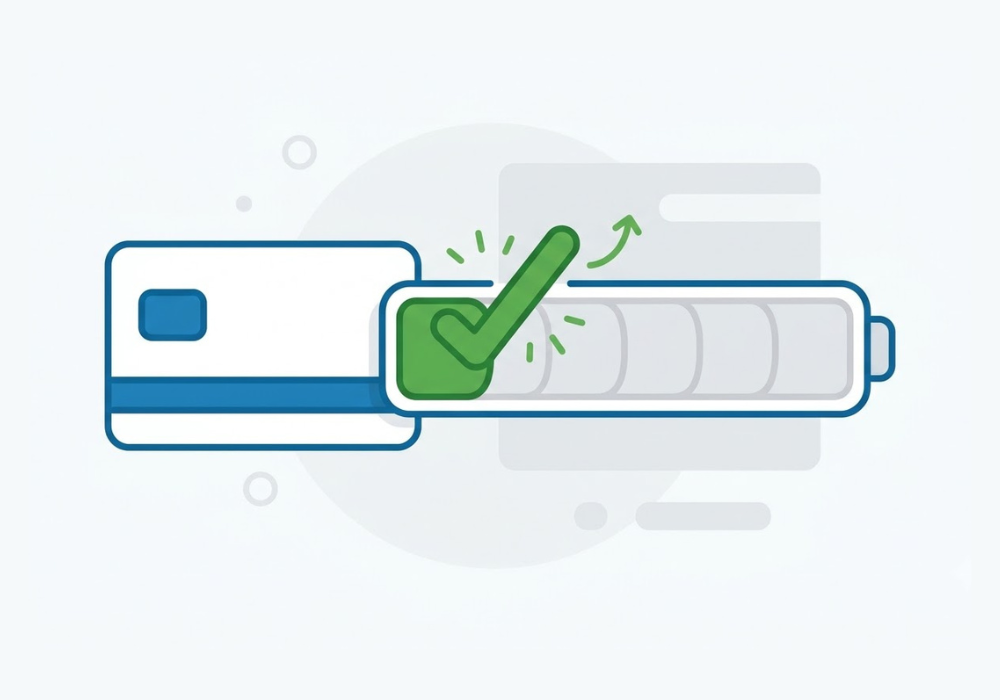
Utilization is the amount you owe on revolving accounts compared with your total limits, and it makes up about 30% of your score. Because it is recalculated each time your balances are reported, it is the fastest thing you can change. Dropping your balances can show up on your score within 30 days.
Aim to keep utilization below 30%, and under 10% if you can. Three high-impact moves:
Pay down balances before your statement closing date, not just the due date. The balance reported to the bureaus is usually the one on your closing date, so paying early lowers the number lenders see.
Make a mid-month payment to keep your reported balance low even if you use your card a lot.
Request a credit limit increase if you have had the card at least six months with on-time payments. A higher limit lowers your utilization instantly, as long as you do not spend more.
Reducing high utilization to a low level can add a meaningful number of points in a single billing cycle, which is why this is the first move for anyone who needs results quickly.
2. Dispute errors on your credit reports
Credit reports contain mistakes more often than people expect, and an error can drag down your score for no reason. Pull your reports and look for wrong balances, accounts that are not yours, duplicate accounts, incorrect late payments, or wrong personal information. If you find something inaccurate, dispute it with the bureau reporting it and keep copies of everything. A successful dispute can raise your score as soon as the error is corrected.
3. Pay every bill on time, every time
Payment history is the largest factor at about 35%, and a single late payment can stay on your report for years. This is the most important long-term habit, even if it works slower than utilization. Set up automatic payments for at least the minimum on every account so a missed due date never sinks your score. On-time payments do not spike your score overnight, but they are the foundation everything else rests on.
4. Become an authorized user
If someone you trust has a credit card with a long history, low balance, and perfect payment record, ask to be added as an authorized user. That account’s positive history can be imported onto your credit report, which helps quickly if you have a thin or limited credit file. Just be sure the primary cardholder has strong habits, because their missed payments could hurt you too.
5. Protect your credit age and avoid unnecessary applications
Two common mistakes quietly cost points:
Do not close old credit cards. Closing an account lowers your total available credit, which raises utilization, and can shorten your average account age. Keep old cards open with a small recurring charge.
Do not apply for several new accounts at once. Each hard inquiry can trim a few points and signals risk to lenders. Space out applications and only apply when you need to.
6. Address collections and derogatory marks carefully
Negative marks like collections are harder to fix, but not hopeless. You can ask a creditor for a goodwill removal of an isolated late payment if you have an otherwise clean record. For collections, understand how they are scored before you pay, which brings us to one of the most misunderstood topics in 2026: medical debt.
What changed for credit scores in 2026
Credit scoring is shifting in ways that can help or hurt depending on your habits. Here is what is actually true this year, including a few points many articles get wrong.
Medical debt is more complicated than the headlines suggest. A federal rule that would have removed most medical debt from credit reports was struck down in court in mid-2025 and is not enforceable as of 2026, so it is not the clean sweep some coverage implied. That said, real relief still exists from two other sources. The three major bureaus voluntarily removed paid medical collections and medical debts under $500 from reports, and at least 15 states have passed their own laws limiting medical debt reporting. The catch: the widely used FICO 8 model, especially common in mortgage lending, still counts medical collections and treats a paid collection the same as an unpaid one. Newer models like FICO 9 and VantageScore 4.0 ignore paid collections. If you have medical debt, check your report to see what is showing and ask a lender which model they use.
Student loan reporting has resumed. After the pandemic-era pause, missed federal student loan payments are back on credit reports, which has pulled down scores for millions of borrowers. If you have federal student loans, make sure you are current.
Buy Now, Pay Later is starting to count. Some BNPL lenders now report to the bureaus. This cuts both ways. Responsible, on-time use can help build history for thin files under newer models, but a missed payment on those “four easy payments” can now follow you. Stacking multiple plans is where people get into trouble.
New scoring models reward improvement. FICO 10T and VantageScore 4.0 use trended data, looking at up to 24 months of history rather than a single snapshot. A borrower steadily paying balances down now looks better than one whose balances are creeping up, even with the same balance today. These models also fold in alternative data like rent and utility payments, which helps people with limited credit history.
How long does it take to improve your credit score?
Speed depends on the lever. Lowering utilization can show up within about 30 days. Correcting a report error can post as soon as the dispute resolves. Building back from a late payment or recovering from a collection takes months of consistent, positive activity, and serious derogatory marks fade over years. There is no legitimate way to add 100 points overnight, so treat any service promising that with skepticism. Some research suggests people who actively monitor and manage their credit gain an average of roughly 28 to 35 points over a year, simply by staying engaged and building good habits.
How to check your credit report for free
You cannot fix what you cannot see, and monitoring your reports is free. Use AnnualCreditReport.com, the only federally authorized source, to get free reports from all three bureaus, Equifax, Experian, and TransUnion. Weekly access is now available, so you can check regularly at no cost.
When you review your reports, look for accounts you do not recognize, incorrect balances or statuses, duplicate entries, wrong personal details, and any late payments you believe are errors. Checking your own reports is a soft inquiry and never lowers your score. Reviewing all three matters because lenders do not always report to every bureau, so your reports, and the scores built from them, can differ.
Credit score myths that cost you money
Myth: Checking your own score hurts it. False. Checking your own credit is a soft inquiry with no impact. Only hard inquiries from applications affect your score.
Myth: Carrying a balance helps your score. False. You do not need to carry debt or pay interest to build credit. Paying in full is best.
Myth: Closing a credit card raises your score. False. Closing a card usually raises utilization and can shorten your history, often lowering your score.
Myth: Your income is part of your credit score. False. Income is not a scoring factor, though lenders may consider it separately when you apply.
Myth: Paying off a collection always fixes your score. Not always. Under the still-common FICO 8 model, a paid collection can still count against you.
Frequently asked questions
What is the fastest way to improve my credit score? Lowering your credit utilization is usually fastest, because it updates within 30 to 60 days. Pay card balances below 30% of your limits, ideally under 10%, and pay before your statement closing date. Disputing report errors can also raise your score quickly.
How long does it take to improve a credit score? It varies by action. Utilization changes can show within about 30 days, and corrected errors post when the dispute resolves. Recovering from late payments or collections takes months of consistent good habits, and there is no legitimate overnight fix.
What is a good credit score in 2026? On the FICO scale of 300 to 850, 670 to 739 is good, 740 to 799 is very good, and 800 and above is exceptional. The average U.S. score is around 714 in early 2026.
Does checking my own credit score lower it? No. Checking your own credit is a soft inquiry and has no effect on your score. Only hard inquiries from credit applications can lower it slightly.
Was medical debt removed from credit reports in 2026? Not entirely. A federal rule that would have removed most medical debt was struck down in court and is not enforceable in 2026. However, the bureaus voluntarily removed paid medical collections and debts under $500, and many states passed their own limits. Some widely used scoring models still count medical collections, so check your report.
How do I check my credit report for free? Use AnnualCreditReport.com, the only federally authorized source, for free reports from Equifax, Experian, and TransUnion. Weekly access is available at no cost, and checking does not affect your score.
Does Buy Now, Pay Later affect my credit score? Increasingly, yes. Some BNPL lenders now report to the bureaus, so on-time payments may help build history under newer models, while missed payments can hurt your score. Avoid stacking multiple plans.
This article is for educational purposes only and is not financial or credit-repair advice. Credit scoring models and reporting rules vary by lender and change over time, and individual results differ. No service can legitimately guarantee a specific point increase or overnight results. If you are struggling with debt, consider speaking with a reputable nonprofit credit counselor.

This Post Has One Comment