
Keep crypto on a reputable exchange when you are actively trading or holding small amounts you can afford to lose access to. Move it to a self-custody wallet, ideally a hardware wallet, once your holdings are large enough that losing them would hurt. Crypto held on an exchange is not FDIC insured, and if the exchange fails, you become an unsecured creditor rather than an owner of your coins.
Most Americans buy their first crypto on an exchange and simply leave it there, because that is the path of least resistance. That is fine for a while. But an exchange balance and a wallet you control are legally and technically different things, and the difference only becomes obvious at the worst possible moment. This guide explains the trade-off in plain English and gives you a clear threshold for when to move.
Key Takeaways
- An exchange holds your crypto for you (custodial). A self-custody wallet means you hold the private keys yourself (non-custodial).
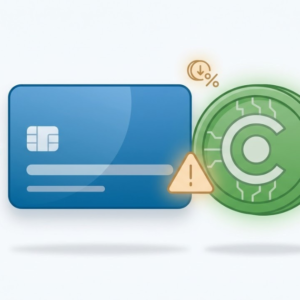
- Crypto is not FDIC or SIPC insured, no matter where you hold it. That protection covers bank deposits and certain securities, not digital assets.
- If a custodial platform goes bankrupt, customer crypto has in past cases been treated as part of the bankruptcy estate, leaving users as unsecured creditors.
- Self-custody removes counterparty risk but transfers 100% of the responsibility to you. Lose the seed phrase and the funds are gone permanently.
- A common approach is a hybrid: a small trading balance on an exchange, the long-term holdings in a hardware wallet.
Exchange vs Wallet at a Glance
| Factor | Crypto Exchange (Custodial) | Self-Custody Wallet (Non-Custodial) |
|---|---|---|
| Who holds the keys | The exchange | You |
| Main risk | Platform failure, hack, freeze, or bankruptcy | You losing your seed phrase or device |
| Recovery if you forget login | Yes, via customer support | No. No one can restore it for you |
| Ease of buying and selling | Built in, instant | Requires transferring to an exchange first |
| Cost | Trading and withdrawal fees | Free (software) or roughly $60 to $200 (hardware) |
| Government insurance | None for crypto assets | None |
| Best for | Active trading, small balances, beginners | Long-term holding, larger balances |
What a Crypto Exchange Actually Does With Your Coins
When you buy Bitcoin on a centralized exchange, you generally do not receive the Bitcoin. You receive an entry in the exchange’s database saying you are owed that Bitcoin. The exchange controls the private keys, pools customer assets, and manages the underlying blockchain addresses.
This is called custodial storage, and it is the same model as a bank holding your dollars, with one enormous difference: your dollars at a bank are federally insured, and your crypto at an exchange is not.
That model has genuine advantages. If you forget your password, support can restore access. If you get phished, some platforms can freeze activity. Buying, selling, and tax reporting are all easier in one place. For a beginner with $300 in crypto, an exchange is a perfectly reasonable place to be.
The risk shows up at scale.
What “Not Your Keys, Not Your Coins” Means
This phrase gets repeated constantly in crypto, and it is not just a slogan. It describes a legal reality.
A private key is the cryptographic secret that authorizes moving crypto on the blockchain. Whoever controls the key controls the asset. If the exchange holds the key, the exchange controls your crypto, and your claim on it is a contractual promise rather than direct ownership.
That distinction was tested during the exchange collapses of recent years. In several high-profile bankruptcies, customer crypto held in general custodial accounts was treated as property of the bankruptcy estate. Customers became unsecured creditors, standing in line behind other claimants and recovering only a portion of their assets, often years later.
The lesson is not that every exchange will fail. It is that “my balance shows on the app” and “I own this asset” are not the same statement.
Is Crypto FDIC Insured?
No. This is the single most common and most dangerous misconception in crypto, so it is worth stating clearly.
FDIC insurance covers deposits at insured banks, up to $250,000 per depositor, per bank, per ownership category. It covers dollars, not digital assets.
SIPC protection covers securities and cash at failed brokerages. It does not cover crypto.
Some platforms hold your uninvested US dollar balance at partner banks, and that cash may be eligible for FDIC pass-through coverage if the bank fails. That is a narrow protection on the cash portion only, and it never protects your Bitcoin, Ethereum, or any other token. It also does not protect you if the crypto platform itself fails.
Read any “FDIC insured” language on a crypto platform carefully. It almost always refers to fiat balances at a partner bank, not your crypto.
Hot Wallet vs Cold Wallet: The Other Half of the Decision
Once you decide to self-custody, you choose between hot and cold storage.
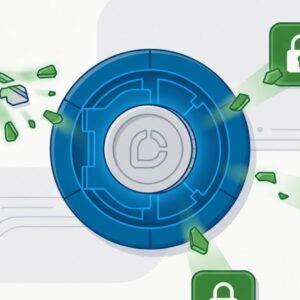
A hot wallet is connected to the internet. Mobile and browser wallets fall in this category. They are free, fast, and convenient for small amounts and for interacting with apps. Because they live on an internet-connected device, they are more exposed to malware, phishing, and malicious approvals.
A cold wallet is offline. A hardware wallet is a small physical device that keeps your private keys isolated. To move funds, you physically confirm the transaction on the device, so even a compromised computer cannot drain it without that confirmation. It costs money and adds a step, and that friction is the point.
| Hot Wallet | Cold Wallet (Hardware) | |
|---|---|---|
| Connectivity | Online | Offline |
| Cost | Free | Roughly $60 to $200 |
| Convenience | High | Moderate |
| Security | Moderate | High |
| Best for | Small, active balances | Long-term savings |
A useful mental model: a hot wallet is the cash in your pocket, a cold wallet is the safe at home, and an exchange is a store that is holding your item behind the counter.
So Where Should You Keep Your Crypto?
Use the amount as your trigger.
Small amounts you are actively trading: a reputable exchange is fine. Turn on two-factor authentication using an authenticator app, not SMS.
Amounts you would be upset to lose: move to self-custody. Many people set a personal threshold, for example anything above one or two months of income.
Long-term holdings you do not plan to touch: hardware wallet, with the seed phrase backed up offline.
A hybrid setup covers most people well: keep a working balance on an exchange for buying and selling, and sweep the rest to a hardware wallet on a regular schedule.
How to Move Crypto Off an Exchange Safely
Transfers on a blockchain are irreversible. There is no chargeback and no support ticket that undoes a mistake. Follow this sequence every time.
- Set up your wallet first and write down the recovery seed phrase on paper. Never store it as a photo, screenshot, cloud note, or password manager entry.
- Copy the receiving address from your wallet, and confirm it is for the correct network. Sending an asset on the wrong network is one of the most common ways funds are lost permanently.
- Send a small test transaction first. A few dollars. Confirm it arrives.
- Send the remainder once the test succeeds.
- Verify the balance in your wallet and record the transaction for tax purposes.
Moving crypto between wallets you own is generally not a taxable event, but keep records anyway so you can prove it later.
Seed Phrase Rules That Prevent Permanent Loss
Your seed phrase (usually 12 or 24 words) is your crypto. Anyone who reads it can take everything, and if you lose it, nobody on earth can recover your funds.
- Write it on paper or steel, never digitally.
- Store copies in two separate secure physical locations.
- Never type it into a website, app, or support chat. No legitimate company will ever ask for it.
- Never photograph it or store it in cloud backup.
- Consider telling one trusted person how to find it in an emergency, since crypto is frequently lost forever when the owner dies.
The most common cause of crypto loss is not hacking. It is people losing access to their own keys.
How Are Crypto Exchanges and Wallets Taxed?
In the US, the IRS treats cryptocurrency as property, not currency. Practical consequences:
- Selling crypto for dollars is a taxable event. So is swapping one crypto for another, and spending crypto on goods or services.
- Buying and holding is not taxable. Neither is transferring between wallets you own.
- Gains held over a year may qualify for lower long-term capital gains rates.
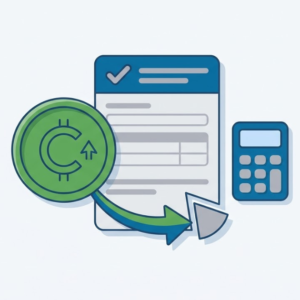
- Exchanges have begun issuing Form 1099-DA for digital asset transactions under broker reporting rules. Reporting requirements in this area have been changing, so confirm current rules for the tax year you are filing.
Self-custody does not exempt you from taxes. It just means you are responsible for your own records.
Red Flags When Choosing an Exchange or Wallet
- No proof-of-reserves or third-party attestation
- Guaranteed yields on deposits, which was a hallmark of the platforms that collapsed
- A wallet app that asks for your seed phrase for any reason
- Wallet apps downloaded from links, ads, or DMs rather than the official site or app store
- Support agents who contact you first, which is nearly always a scam
Frequently Asked Questions
Should I keep my crypto on an exchange or in a wallet?
Keep small, actively traded amounts on a reputable exchange, and move larger long-term holdings to a self-custody wallet. On an exchange, the platform controls your private keys, so you rely on its solvency and security. A hardware wallet removes that counterparty risk but makes you fully responsible for your seed phrase.
Is crypto on an exchange FDIC insured?
No. FDIC insurance covers bank deposits and SIPC covers securities, neither covers crypto assets. Some platforms hold your US dollar cash balance at partner banks, which may carry pass-through FDIC coverage on that cash only. Your crypto itself is never federally insured.
What happens to my crypto if an exchange goes bankrupt?
In past bankruptcies, crypto held in general custodial accounts has been treated as property of the bankruptcy estate, making customers unsecured creditors who recover only part of their holdings, often after years of proceedings. Self-custodied crypto is unaffected by a platform’s bankruptcy.
What is the difference between a hot wallet and a cold wallet?
A hot wallet is connected to the internet, making it convenient but more exposed to hacks and phishing. A cold wallet, typically a hardware device, keeps private keys offline and requires physical confirmation to send funds, which makes it far safer for long-term storage.
Do I pay taxes when I move crypto to my own wallet?
No. Transferring crypto between wallets you control is not a taxable event because you have not disposed of the asset. Taxes apply when you sell, swap one crypto for another, or spend it. Keep records of transfers so you can document your cost basis.
Can I recover my crypto if I lose my seed phrase?
No. With self-custody, there is no password reset and no support team that can restore access. The seed phrase is the only backup, which is why it must be written down physically and stored securely in more than one location.
Is a hardware wallet worth it?
For most people holding a meaningful amount long term, yes. A one-time cost of roughly $60 to $200 removes exchange counterparty risk and protects against malware on your computer. For very small balances, the cost and complexity may outweigh the benefit.
The Bottom Line
An exchange is where you buy crypto. A wallet is where you own it. That distinction does not matter when you have $200 in an app, and it matters enormously when you have serious money at stake. Start with a reputable exchange, learn the mechanics, then move your long-term holdings into self-custody with a hardware wallet and a properly stored seed phrase. The transfer takes ten minutes. Skipping it has cost people everything.
This article is for educational purposes and is not financial, tax, or investment advice. Cryptocurrency is volatile and you can lose money. Tax and regulatory rules change frequently, so confirm current requirements and consult a qualified professional for your situation.


This Post Has One Comment