Quick answer: Fidelity Crypto lets you buy and sell actual cryptocurrency inside the same Fidelity app you use for stocks and retirement accounts. In 2026 it offers four coins (Bitcoin, Ethereum, Litecoin, and Solana) plus Fidelity’s own stablecoin, the Fidelity Digital Dollar (FIDD). Every buy and sell costs a flat 1% fee, the minimum purchase is $1, and it’s available in all 50 states. You can also hold those coins in a Fidelity Crypto IRA, or skip the coins entirely and buy Fidelity’s spot crypto ETFs, FBTC, FETH, and FSOL, in a regular brokerage account or IRA. Fidelity Crypto is a good fit for long-term investors who already use Fidelity and want simplicity. It’s a poor fit for active traders or anyone who wants XRP, other altcoins, or staking.
If you already have a Fidelity account, there’s a good chance you’ve noticed the crypto tab in the app and wondered whether it’s worth using. Fidelity has quietly built one of the more complete crypto setups among traditional brokers. You can now buy coins directly, hold them in a retirement account, withdraw them to your own wallet, buy a crypto ETF, or hold Fidelity’s own digital dollar. But the options overlap, and the fees work very differently depending on which one you pick. This guide walks through each one, what it costs, and which makes sense for you.
What is Fidelity Crypto?
Fidelity Crypto is Fidelity’s retail product for buying and holding real cryptocurrency, not a fund that tracks it. The coins are held by Fidelity Digital Assets, National Association, a national trust bank owned by Fidelity’s parent company. Your crypto sits in a separate Fidelity Crypto account that you fund from a linked Fidelity brokerage account, and it shows up right alongside your other investments in the app.
This matters because “Fidelity crypto” can mean three different things, and people searching for it usually mix them up.
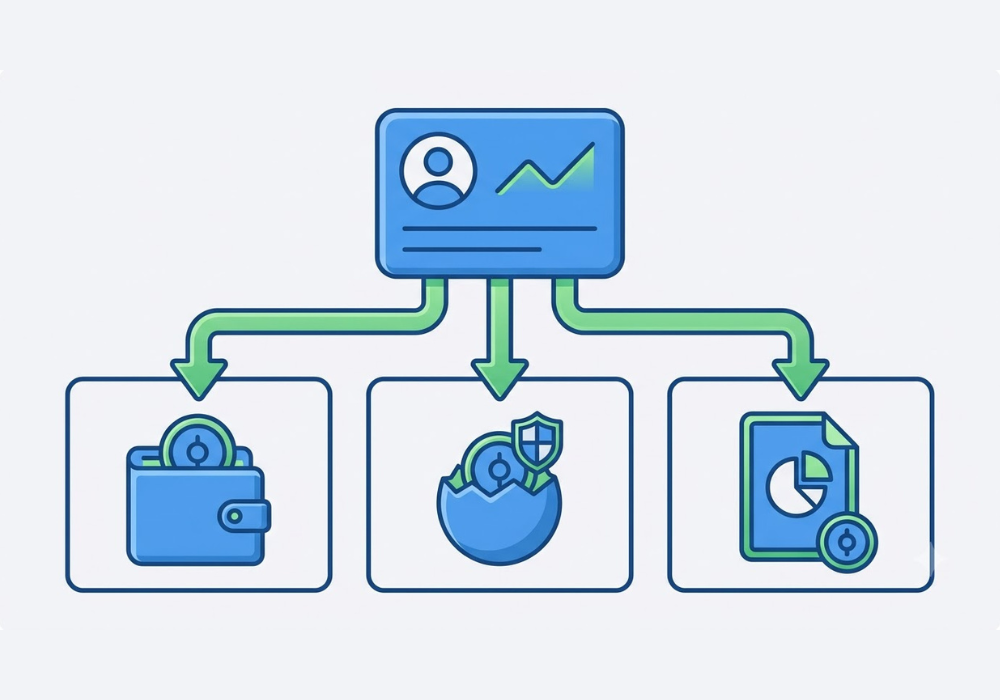
| Way to own crypto at Fidelity | What you own | Where it lives | Main cost |
|---|---|---|---|
| Fidelity Crypto account | Actual coins | Separate account at Fidelity Digital Assets | 1% per buy or sell |
| Fidelity Crypto IRA | Actual coins, tax-advantaged | Separate IRA linked to a brokerage IRA | 1% per buy or sell |
| Spot crypto ETFs (FBTC, FETH, FSOL) | Shares of a fund that holds the coins | Regular brokerage account or IRA | 0.25% a year expense ratio, $0 commission |
The rest of this guide breaks down each option.
Which cryptocurrencies can you buy on Fidelity?
Fidelity keeps the menu short on purpose. As of 2026, you can buy:
- Bitcoin (BTC)
- Ethereum (ETH)
- Litecoin (LTC)
- Solana (SOL), though Oregon residents can’t buy it
- Fidelity Digital Dollar (FIDD), Fidelity’s dollar-backed stablecoin
That’s it. There’s no XRP, no Dogecoin, no Cardano, and no smaller altcoins. Fidelity also doesn’t offer staking on coins held in your Fidelity Crypto account, crypto futures, or margin trading. If you want XRP exposure at Fidelity, the only route is one of the spot XRP ETFs listed in the brokerage, not the coin itself.
For most beginners, the short list is a feature, not a bug. Bitcoin and Ethereum make up the bulk of the crypto market’s value, and a limited menu keeps you away from the speculative tokens where most retail investors lose money. But if you want variety, a dedicated exchange will serve you better.
Fidelity Crypto fees: what you actually pay
Fidelity Crypto charges a 1% fee on every buy and every sell. There’s no account fee, no custody fee, and no fee to swap FIDD back into dollars. Before December 2025, Fidelity built the same 1% into the price as a spread. It now shows the fee as a separate line, which makes it easier to see what you’re paying.
Here’s what that looks like in real dollars:
| Trade | Fee |
|---|---|
| Buy $100 of Bitcoin | $1 |
| Buy $1,000 of Ethereum | $10 |
| Buy $1,000, then sell it later at the same value | $20 total |
| Buy $10,000 of Bitcoin | $100 |
Fidelity markets this as transparent pricing, and it is. But 1% isn’t cheap. Advanced trading screens on dedicated exchanges, like Kraken Pro, often charge well under half a percent at entry-level volume. Simple “buy” buttons on many apps cost about the same as Fidelity or more. Verify current fee schedules before you compare, since they change often.
Withdrawal fees: if you move coins out to an external wallet, you pay a network fee that Fidelity quotes up front. Fidelity’s terms say it keeps any difference if the quoted fee turns out higher than the actual network cost, so withdrawals can cost slightly more than the blockchain itself charges.
Fidelity Crypto vs. Fidelity’s crypto ETFs: which is cheaper?
This is the most useful comparison for a Fidelity customer, and the answer depends on how long you plan to hold.
Fidelity runs three spot crypto ETFs:
- Fidelity Wise Origin Bitcoin Fund (FBTC): holds Bitcoin, 0.25% expense ratio, and one of the largest Bitcoin ETFs in the country.
- Fidelity Ethereum Fund (FETH): holds Ether, 0.25% expense ratio.
- Fidelity Solana Fund (FSOL): holds Solana, 0.25% expense ratio, and stakes part of its SOL. Fidelity keeps 15% of the staking rewards as a fee, and the fund passes the rest through to shareholders.
You buy these like any stock, with $0 commission. Instead of a 1% charge each time you trade, you pay 0.25% a year while you hold.
A simple way to think about it: a single 1% purchase fee costs about the same as four years of FBTC’s expense ratio. A full round trip (buy plus sell, 2% total) costs about as much as eight years of holding the ETF. So:
- If you plan to buy and hold for many years and don’t care about owning the actual coin, the ETF is usually cheaper and simpler. It also sits in the same account as your stocks, gets reported on your normal 1099, and works in any Fidelity IRA.
- If you want the coins themselves, to move them to a hardware wallet, send them somewhere, or trade outside market hours, you need Fidelity Crypto.
One catch with ETFs: Fidelity requires you to sign its Designated Investments Agreement and set your investment objective to “Most Aggressive” before it lets you buy spot crypto ETFs, including its own. It takes a few minutes, but it surprises a lot of first-time buyers.
For a deeper side-by-side look, see our guide to Bitcoin ETFs vs. buying Bitcoin directly.
The Fidelity Crypto IRA
A regular Fidelity IRA can hold crypto ETFs, but it can’t hold actual coins. For that, Fidelity offers a separate Fidelity Crypto IRA, which links to a brokerage IRA and holds BTC, ETH, LTC, and SOL.
Key details:
- Account types: Traditional, Roth, or Rollover IRA.
- Cost: no account opening or maintenance fee, but the same 1% fee on every trade.
- Availability: not offered in California or Oregon.
- Transfers: you can’t move coins in from another wallet or out to one. You fund it with dollars and sell back to dollars.
- FIDD: the stablecoin isn’t available in the Crypto IRA.
The appeal is tax treatment. Gains inside a Roth grow tax-free, and a Traditional IRA defers taxes until withdrawal, so frequent rebalancing doesn’t create a tax bill each year. For many people, though, simply buying FBTC or FETH inside an existing IRA is cheaper and gets you the same price exposure. Our full guide to crypto IRAs and crypto 401(k)s compares the options in more detail.
FIDD: Fidelity’s stablecoin
In early February 2026, Fidelity launched the Fidelity Digital Dollar (FIDD), a stablecoin pegged one-to-one to the U.S. dollar. It’s issued by Fidelity Digital Assets and backed by reserves of cash, cash equivalents, and short-term U.S. Treasuries, which Fidelity’s asset management arm manages. Fidelity publishes the circulating supply and reserve value every business day.
The launch followed the GENIUS Act of July 2025, which created the first federal rules for payment stablecoins.
Inside Fidelity Crypto, you can buy or redeem FIDD for $1 with no trading fee. It runs on Ethereum, so you can send it to any Ethereum address, and it also trades on some outside exchanges. One thing to understand: FIDD is not a savings account. A stablecoin is designed to hold its value, not to earn interest, and it isn’t FDIC-insured.
Moving crypto in and out of Fidelity
For years, the biggest complaint about Fidelity Crypto was that you couldn’t withdraw your coins. That’s changed. You can now deposit and withdraw supported coins in a taxable Fidelity Crypto account, which means you can move Bitcoin to a hardware wallet if you want full self-custody.
A few limits apply:
- You’ll need to verify your identity with an ID scan and selfie before your first transfer.
- A new withdrawal address takes about two to three business days to activate.
- Withdrawals are capped at $2,000 a day by default, or $25,000 a day if you turn on an authenticator app.
- Transfers aren’t available in the Crypto IRA.
If you’re weighing whether to keep coins on a platform or move them to your own wallet, our crypto exchange vs. wallet guide walks through the trade-offs.
Is Fidelity Crypto safe?
Fidelity is one of the largest and most established financial firms in the country, and its crypto arm operates as an OCC-chartered national trust bank. Fidelity also holds crypto as customer assets rather than as the bank’s own general assets, which matters if the company ever ran into financial trouble.
That said, a few honest caveats apply:
- Crypto isn’t SIPC-protected or FDIC-insured. Your stocks at Fidelity have SIPC coverage if the brokerage fails, but your coins don’t. Cash sitting in your Fidelity Crypto account is held at Citibank and is FDIC-eligible up to the limits.
- Fidelity doesn’t publish proof of reserves or the share of coins held in cold storage, citing security reasons.
- Crypto prices are extremely volatile. A trusted custodian protects you from theft or company failure, not from a 50% price drop.
Turn on two-factor authentication, ideally with an authenticator app, which also raises your withdrawal limit.
Taxes on Fidelity crypto
Buying crypto isn’t taxable, but selling, swapping, or spending it usually is. The IRS treats crypto as property, so you owe capital gains tax on any profit when you sell. Brokers, including Fidelity, now report crypto sales to the IRS, starting with 2025 transactions, on the new Form 1099-DA.
The ETF route keeps things simpler: FBTC, FETH, and FSOL show up on your regular brokerage 1099 like any other fund. Holding coins in a Crypto IRA defers or eliminates the tax depending on the IRA type. For the full picture, read our crypto taxes guide and our explainer on the wallet-by-wallet cost basis rule.
Pros and cons of Fidelity Crypto
The upside:
- Crypto and traditional investments in one app, with one login.
- A clear, flat 1% fee with a $1 minimum and no account or custody fees.
- A crypto IRA option for tax-advantaged coin ownership.
- Low-cost spot ETFs (FBTC, FETH, FSOL) as a cheaper alternative for long-term holders.
- Withdrawals to external wallets in taxable accounts.
- A large, established company with a regulated trust bank as custodian.
The trade-offs:
- Only four coins plus a stablecoin, with no XRP or smaller altcoins.
- 1% per trade adds up for frequent buyers.
- No staking on coins, and no futures or margin.
- Crypto IRA restrictions: no transfers, and not available in California or Oregon.
- Withdrawal limits and network-fee markups on outgoing transfers.
Who is Fidelity Crypto best for?
Fidelity Crypto makes the most sense if you:
- Already invest with Fidelity and want a small crypto position without opening a new account.
- Plan to buy Bitcoin or Ethereum occasionally and hold for years.
- Want actual coins in a tax-advantaged IRA.
- Value a big-name custodian over the lowest possible fee.
You’ll probably be happier somewhere else if you trade often, want coins beyond the big four, want to earn staking rewards, or need advanced order types. And if you just want price exposure for retirement, Fidelity’s own ETFs are usually the better deal than Fidelity Crypto itself.
How to buy crypto on Fidelity
- Open or log in to a Fidelity brokerage account. You need one to fund Fidelity Crypto.
- Open a Fidelity Crypto account from the crypto tab in the app or on fidelity.com and accept the crypto terms. To use an IRA, open a Fidelity Crypto IRA instead.
- Move cash from your brokerage account into the crypto account.
- Choose your coin, enter a dollar amount (as little as $1), and review the 1% fee before you confirm.
- Set up security, including an authenticator app, especially if you plan to withdraw to your own wallet.
- Keep records of your purchases for taxes, even though Fidelity reports sales on Form 1099-DA.
To buy an ETF like FBTC instead, search the ticker in your regular brokerage account, complete the Designated Investments Agreement if prompted, and place the trade like any other stock.
Frequently asked questions
Can you buy crypto on Fidelity?
Yes. Fidelity Crypto lets you buy and sell Bitcoin, Ethereum, Litecoin, and Solana, plus Fidelity’s FIDD stablecoin, starting at $1. You can also buy spot crypto ETFs like FBTC, FETH, and FSOL in a regular brokerage account or IRA.
What are Fidelity Crypto’s fees?
Fidelity charges a 1% fee on every crypto buy and sell, shown as a separate line on each trade. There are no account or custody fees, and buying or redeeming FIDD with dollars is free. Withdrawals to outside wallets carry a quoted network fee.
Can I buy XRP on Fidelity?
Not as a coin. Fidelity Crypto doesn’t offer XRP. You can get XRP exposure through the spot XRP ETFs listed in Fidelity’s brokerage, after signing Fidelity’s Designated Investments Agreement.
Does Fidelity have a crypto IRA?
Yes. The Fidelity Crypto IRA holds Bitcoin, Ethereum, Litecoin, and Solana as a Traditional, Roth, or Rollover IRA, with no account fees and a 1% trading fee. It isn’t available in California or Oregon, and coins can’t be transferred in or out.
Is it better to buy Bitcoin or FBTC on Fidelity?
For long-term holding, FBTC is usually cheaper. It charges 0.25% a year with no commission, while buying actual Bitcoin costs 1% each way. Buy the coin itself only if you want to withdraw it, send it, or self-custody.
Can I transfer crypto out of Fidelity?
Yes, from a taxable Fidelity Crypto account. You’ll need identity verification, new addresses take a few business days to activate, and daily withdrawals are capped at $2,000, or $25,000 with an authenticator app. Crypto IRA holdings can’t be transferred.
Is crypto at Fidelity insured?
No. Crypto held at Fidelity isn’t covered by SIPC or FDIC insurance. It’s held by Fidelity Digital Assets, a national trust bank, as customer assets. Cash waiting in your crypto account is FDIC-eligible through Citibank, up to the limits.
This article is for educational and informational purposes only and is not investment, tax, or financial advice. It is not affiliated with or endorsed by Fidelity Investments. Fees, supported coins, account rules, and state availability reflect 2026 information and can change. Cryptocurrency is highly volatile, is not FDIC- or SIPC-insured, and you can lose some or all of your investment. Verify current details directly with Fidelity and consider consulting a licensed professional before investing.