
Quick answer: The fastest way to pay off debt is to list every balance with its interest rate, keep making minimum payments on all of them, then throw every extra dollar at one debt at a time. Target your highest-interest debt first, called the avalanche method, to save the most money, or your smallest balance first, called the snowball method, if you need motivation to stay on track. Free up an extra $200 to $500 a month by cutting expenses, stop adding new debt, and roll each freed-up payment into the next balance. With the average credit card interest rate near 21% in 2026, eliminating high-interest debt is one of the best guaranteed returns on your money.
Debt is heavy, and in 2026 it is more expensive than ever. Americans owe about $1.25 trillion on credit cards alone, at an average rate of roughly 21%, which means carrying a balance quietly drains hundreds or thousands of dollars a year. The good news is that a clear, proven plan can get you out of debt years faster and save you a fortune in interest. Here is exactly how to do it, step by step.
Step 1: List all your debts
You cannot beat what you cannot see. Start by writing down every single debt in one place, including credit cards, personal loans, auto loans, student loans, medical bills, and buy-now-pay-later balances. For each one, record four things:
- The creditor name.
- The current balance, to the dollar.
- The actual interest rate (APR) charging right now, not a teaser rate.
- The minimum payment and due date.
This master list is the foundation of your entire plan. It turns a vague, stressful feeling into a concrete set of numbers you can attack in order.
Step 2: Build a small starter emergency fund
Before you go aggressive, set aside a small cushion of about $1,000 to $2,000 in savings. This may feel counterintuitive when you are eager to kill debt, but it is essential. Without a buffer, the first unexpected car repair or medical bill lands right back on a credit card, undoing your progress and your morale. A small emergency fund keeps you from adding new debt while you pay off the old, so your progress only moves one direction.
Step 3: Choose your payoff method
There are two proven methods for paying off debt fast, and both work. The difference is what they prioritize.
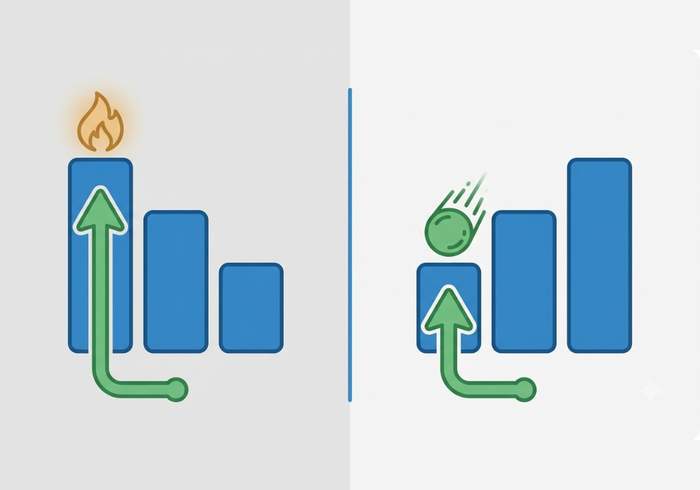
| Feature | Debt avalanche | Debt snowball |
|---|---|---|
| Pay off first | Highest interest rate | Smallest balance |
| Biggest benefit | Saves the most money and time | Builds motivation with quick wins |
| Best for | Disciplined budgeters focused on cost | People who need momentum to stay on track |
| Trade-off | The first payoff can feel slow | Costs a bit more in total interest |
With both methods, you pay the minimum on every debt, then put all your extra money toward one target debt. The avalanche method targets your highest-APR debt first, which saves the most money because you are killing your most expensive debt fastest. The snowball method targets your smallest balance first, giving you a quick, motivating win that builds momentum.
Which should you choose? Be honest with yourself. If you are disciplined and want to save the most, choose avalanche. If you have started and quit debt plans before, choose snowball, because a plan you actually finish beats a mathematically perfect one you abandon. Many people even use a hybrid: knock out one or two tiny balances for momentum, then switch to avalanche to minimize interest.
Step 4: Find extra money to attack your debt
Your payoff speed depends almost entirely on how much extra you can put toward debt each month beyond the minimums. Finding even $200 to $500 a month can dramatically shorten your timeline. Look in two places:
- Cut expenses. Review your recurring costs and cancel or reduce what you can. Cutting two subscriptions, trimming dining out, or renegotiating a bill can free up real money fast.
- Boost income. A side gig, selling unused items, or redirecting a bonus or tax refund all add fuel to your payoff.
Every extra dollar you find goes straight to your target debt, and the impact compounds over time.
Step 5: Automate everything and stop adding new debt
Two habits protect your progress. First, automate your minimum payments on every debt so you never trigger a late fee or a penalty APR that sets you back. Then automate a fixed extra payment toward your target debt so progress happens without willpower. Second, stop adding new debt. If a credit card is what you are paying off, pause using it. Nothing stalls a payoff faster than charging new purchases onto the very card you are trying to eliminate.
Step 6: Roll your payments forward
This is the engine that makes payoff accelerate. When you finish paying off one debt, do not absorb that freed-up payment back into your everyday spending. Instead, roll the entire amount, the minimum plus your extra, onto your next target debt. Now that debt gets attacked with an even bigger monthly payment, so it falls faster. As each debt disappears, your payment toward the next grows, building unstoppable momentum until you are debt-free. This rollover is why both the avalanche and snowball methods work so powerfully.
Step 7: Track your progress and stay motivated
Paying off debt is a marathon, and motivation matters. Update your debt list every month and watch the balances shrink. Seeing progress, whether it is a balance hitting zero or your total dropping below a milestone, keeps you going through the long middle stretch. Some people use a chart, an app, or a simple spreadsheet to make the shrinking numbers visible.
Tools that can speed up your payoff
Beyond the core plan, a few tools can accelerate things, each with a catch to watch.
- 0% balance transfer cards. Moving high-interest credit card debt to a card with a 0% introductory APR can pause interest and let more of your payment hit the principal. Just factor in the transfer fee, usually 3% to 5%, repay as much as possible before the promo period ends, and avoid new spending on the card. If a balance rolls off the promo into a high rate near 27%, the savings can vanish, so have a payoff plan for the intro window.
- Debt consolidation loans. A personal loan with a lower fixed rate can combine several high-interest debts into one predictable monthly payment. This works best if the loan’s rate is meaningfully lower than your current rates and you do not run the cards back up.
- Negotiating with creditors. You can sometimes ask for a lower interest rate or a hardship plan, especially with a solid payment history. It never hurts to call and ask.
Avalanche vs. snowball: the real numbers
How much does the method actually matter? The avalanche always wins on paper. On a typical $25,000 mixed-debt load, the avalanche method beats the snowball by roughly $1,400 in interest and shortens payoff by about four to six months. The larger your debt, the bigger that gap grows, reaching several thousand dollars on balances above $25,000.
But there is a behavioral cost to consider. If choosing avalanche means you lose motivation and quit, you pay far more than $1,400. Research consistently shows people stick with the snowball better because of its quick wins. The honest bottom line: the best method is the one you will actually finish, so pick based on an honest read of your own habits.
Common mistakes that keep you in debt
- Adding new debt on the card you are paying off, which is the fastest way to stall out.
- Paying only minimums, which can stretch a payoff for decades as interest piles up.
- Falling for teaser-rate traps without a plan to repay before the promo ends.
- Skipping the emergency cushion, so every surprise expense becomes new debt.
- Giving up after a setback. One tough month is not failure. Adjust and keep going.
When to get help
If you cannot make your minimum payments, do not wait, because waiting usually makes things worse. Contact your creditors early to ask about hardship options. For structured help, a reputable nonprofit credit counseling agency, such as those affiliated with the National Foundation for Credit Counseling, can review your budget and set up a debt management plan, often at low or no cost. Be cautious with for-profit debt settlement companies that charge high fees and can damage your credit. Getting help early is a sign of strength, not failure.
How fast can you really pay off debt?
Your timeline depends on three things: your total balance, your interest rates, and how much extra you can pay each month. As a simple illustration, aggressively adding a few hundred dollars a month on top of minimums can turn a payoff that would have taken a decade into one that takes two or three years, while saving thousands in interest. Use a debt payoff calculator with your real numbers to see your exact timeline, then commit to the plan.
Frequently asked questions
What is the fastest way to pay off debt?
List every debt with its interest rate, make minimum payments on all of them, then put every extra dollar toward one debt at a time. Targeting your highest-interest debt first, the avalanche method, saves the most money and time, while rolling each freed-up payment into the next debt accelerates your payoff.
Is the avalanche or snowball method better?
The avalanche method saves more money by targeting the highest interest rate first, often by several hundred to several thousand dollars. The snowball method targets the smallest balance first for motivation. The best choice is the one you will actually stick with, since a finished plan beats an abandoned optimal one.
Should I pay off debt or save first?
Do a little of both. Build a small starter emergency fund of about $1,000 to $2,000 first, so surprise expenses do not send you back into debt, then focus aggressively on paying off high-interest debt, which usually costs far more than savings earns.
Does paying off debt help my credit score?
Usually, yes. Lowering your balances reduces your credit utilization ratio, a major factor in your credit score, and making on-time payments throughout the process helps as well. Keeping paid-off cards open can also help by maintaining your available credit.
Should I use a balance transfer to pay off debt?
A 0% introductory APR balance transfer can save significant interest if you repay most of the balance before the promo period ends. Factor in the transfer fee of 3% to 5%, avoid new spending on the card, and have a plan for any balance left when the promo rate expires.
How much extra should I put toward debt each month?
As much as you can sustain. Even an extra $200 to $500 a month dramatically shortens your payoff and cuts interest. Find it by trimming recurring expenses and boosting income, then automate that fixed extra payment toward your target debt.
What should I do if I can’t make my minimum payments?
Contact your creditors early to ask about hardship options, since waiting makes it worse. A reputable nonprofit credit counseling agency can help you build a plan, often at low or no cost. Be wary of for-profit debt settlement firms with high fees.
This article is for educational purposes only and is not financial advice. Interest rates, terms, and individual circumstances vary and change over time. Consider speaking with a reputable nonprofit credit counselor or a licensed financial professional about your specific situation before making decisions.
